Smart Factories: Concepts and Features
Exploring how new technologies, including artificial intelligence (AI), revolutionize manufacturing processes.
A smart factory is a cyber-physical system that leverages advanced technologies to analyze data, automate processes, and learn continuously. It’s part of the Industry 4.0 transformation, which combines digitalization and intelligent automation. Here are some key features:
- Interconnected Network: Smart factories integrate machines, communication mechanisms, and computing power. They form an interconnected ecosystem where data flows seamlessly.
- Advanced Technologies: Smart factories use AI, machine learning, and robotics to optimize operations. These technologies enable real-time decision-making and adaptability.
- Data-Driven Insights: Sensors collect data from equipment, production lines, and supply chains. AI processes this data to improve efficiency, quality, and predictive maintenance.
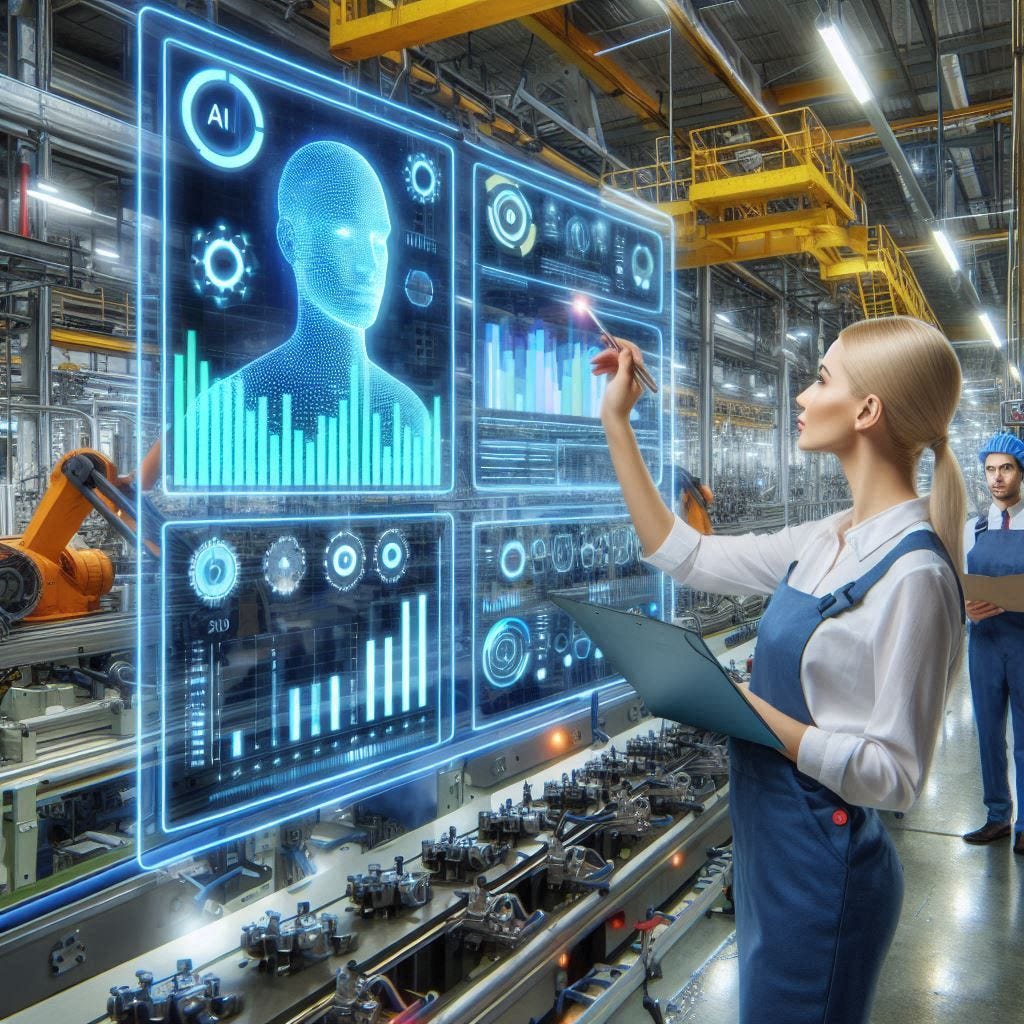
Automation, Robots, and AI on the Factory Floor
1. Production Automation
- Robotic Arms: Robots handle repetitive tasks like assembly, welding, and material handling. They enhance precision and speed.
- Collaborative Robots: These work alongside humans, assisting with tasks like packaging, quality control, and logistics.
2. Quality Inspection
- Visual Inspection: AI-powered computer vision systems analyze images or videos to detect defects, ensuring product quality. For instance, a custom Convolutional Neural Network (CNN) can achieve 99.86% accuracy in inspecting casting products.
- Sound Analytics: AI algorithms process audio data to identify anomalies (e.g., machinery malfunctions) based on sound patterns.
3. IoT + AI: Predictive Maintenance and Energy Efficiency
- Predictive Maintenance (IoT Sensors): Connected sensors monitor equipment health. AI algorithms predict failures, allowing timely maintenance. This minimizes unplanned downtime and reduces costs.
- Energy Management and Energy Consumption Analysis: AI analyzes vast data sets to optimize energy usage. It helps reduce waste, manage various energy sources, and enhance sustainability.
- Predictive Energy Demand: AI predicts energy demand patterns, aiding efficient resource allocation.
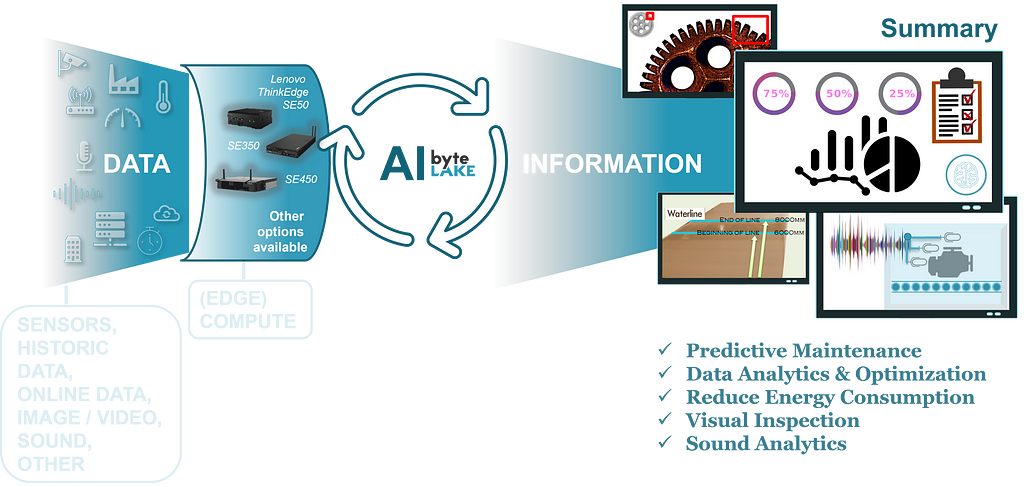
AI-Driven Energy Management in Smart Factories
1. Real-Time Energy Optimization
- IoT Data Integration: Smart factories deploy IoT sensors across their infrastructure to collect real-time data on energy consumption. These sensors monitor machinery, lighting, HVAC systems, and other energy-intensive components.
- Weather Forecast Integration: By combining IoT data with weather forecasts, AI algorithms predict energy demand variations. For example: when a heatwave is predicted, the factory can pre-cool the facility during off-peak hours to reduce energy costs during peak demand.
2. Dynamic Energy Source Selection
- Production Schedules and Energy Sources: AI analyzes production schedules, demand patterns, and energy prices. It optimally selects energy sources (e.g., solar, grid, and battery storage) based on cost and availability. For example: during high-demand production hours, the factory might rely on grid power. At night or during low-demand periods, it switches to stored energy from batteries or renewable sources.
3. Predictive Maintenance and Energy Efficiency
- Predictive Maintenance: AI predicts equipment failures, preventing unplanned downtime. Well-maintained machinery operates more efficiently, reducing energy waste.
- Energy-Efficient Equipment: AI identifies energy-hungry equipment and suggests upgrades or replacements. For instance: replacing old motors with energy-efficient ones, installing variable frequency drives (VFDs) to optimize motor speed, and others.
4. Demand Response and Load Shifting
- Demand Response Programs: AI participates in utility demand response programs. When the grid is stressed, the factory reduces non-essential loads or switches to backup power.
- Load Shifting: AI shifts energy-intensive processes to off-peak hours. For example: running heavy machinery during nighttime when electricity rates are lower, charging electric forklifts during off-peak hours, etc.

Benefits and Dollar Savings
- Reduced Energy Bills: By optimizing energy usage, factories save on electricity costs.
- Carbon Footprint Reduction: Efficient energy management leads to lower greenhouse gas emissions.
- Operational Efficiency: Fewer breakdowns and smoother operations improve overall productivity.
- Example: A smart factory in Ohio reduced its energy costs by 15% through AI-driven energy management, resulting in annual savings of $500,000.
AI and IoT empower smart factories to make data-driven decisions, minimize waste, and contribute to a more sustainable future. Dollar savings, environmental benefits, and operational efficiency go hand in hand.
Moreover, implementing automated visual inspection and AI-driven predictive maintenance in factories enables more benefits like:
Reduced Downtime:
- Predictive Maintenance: By identifying potential equipment failures before they occur, factories can schedule maintenance during planned downtime. This minimizes unplanned interruptions and keeps production lines running smoothly.
Enhanced Quality Control:
- Automated Visual Inspection: AI-powered systems detect defects, inconsistencies, or deviations in real-time. This ensures that only high-quality products reach the market.
- Cost Savings: Fewer defective products mean less waste and rework, leading to cost savings.
Optimized Resource Allocation:
- Energy Efficiency: AI analyzes energy consumption patterns and suggests adjustments. Factories can allocate resources (such as electricity, water, and raw materials) more efficiently.
- Resource Cost Reduction: By using resources judiciously, factories reduce expenses.
Improved Safety:
- Predictive Maintenance: Well-maintained machinery is less likely to malfunction, reducing safety risks for workers.
- Visual Inspection: Detecting safety hazards (e.g., loose bolts, and faulty wiring) prevents accidents.
Streamlined Inventory Management:
- Predictive Maintenance: AI predicts spare part requirements. Factories maintain optimal inventory levels, avoiding overstocking or stockouts.
- Cost Savings: Efficient inventory management reduces storage costs and ensures timely replacements.
Better Workforce Utilization:
- Predictive Maintenance: Workers focus on value-added tasks instead of emergency repairs.
- Visual Inspection: Skilled workers can focus on complex inspections, while AI handles routine checks.
Reduced Environmental Impact:
- Energy Efficiency: By optimizing energy usage, factories contribute to sustainability goals and reduce their carbon footprint.
- Waste Reduction: Fewer defects mean less waste, benefiting the environment.
Smart factories leverage technologies like AI, IoT, and advanced robotics to optimize efficiency, quality, and competitiveness. Benefits include reduced downtime, increased operational efficiency, improved product quality, enhanced worker safety, and greater flexibility in responding to market demands.
These technologies not only enhance efficiency but also lead to tangible cost savings, improved safety, and a more sustainable manufacturing ecosystem. Overall, the adoption of smart factory technologies leads to tangible benefits, cost savings, and operational improvements.
Beyond the Factory Floor: AI in Back Office Automation
While AI plays a crucial role on the factory floor, its impact extends beyond production lines. Back-office automation is equally vital. Here are a few examples:
- Financial Analysis: AI analyzes financial data, detects anomalies, and predicts market trends. CFOs and financial analysts benefit from faster insights and better decision-making.
- Contract Review: Legal teams use generative AI to review contracts, identifying potential issues more accurately.
- HR Automation: Generative AI streamlines employee onboarding and many other tasks, once performed by HR teams. These include benefits administration, payroll processing, chatbots handling routine HR inquiries, etc.
- Document Processing: AI automates data entry, invoice processing, e-mail management, so administrative teams can focus on higher-value work.
In summary, AI transforms not only the factory floor but also the entire organizational ecosystem.

Learn more:
- What Is a Smart Factory? | NetSuite
- The smart factory (deloitte.com)
- DUP_The-smart-factory.pdf (deloitte.com)
- Micromachines | Free Full-Text | Artificial Intelligence-Based Smart Quality Inspection for Manufacturing (mdpi.com)
- Inspection robot basics: A 101 guide to automated quality assurance — Standard Bots
- The Future of Manufacturing: Integrating Cobots and AI for Quality Inspection | Quality Digest
- Role of IoT in Predictive Maintenance: Things to Know (intuz.com)
- IoT Predictive Maintenance | AspenTech
- IoT Predictive Maintenance: Components, Use Cases & Benefits (xyte.io)
- AI, Machine Learning and the Future of the Back Office (artsyltech.com)
- How AI Consulting Can Help Businesses to Automate Their Back-office Operations | RTS Labs
- 5 ways generative AI could change back-office operations | Pega
- 43 Back Office Automation Examples in 2024: RPA, WLA, AI/ML (aimultiple.com)
Smart Factories: Concepts and Features was originally published in Becoming Human: Artificial Intelligence Magazine on Medium, where people are continuing the conversation by highlighting and responding to this story.