AI and Deepfakes: Challenges and Regulatory Responses in India
Top Free AI Chatbots: The Best Free ChatGPT Alternatives
I’ve tested dozens of AI chatbots since ChatGPT’s debut. Here’s my new top pick

Since the launch of ChatGPT, AI chatbots have been all of the rage because of their ability to do a wide range of tasks that can help you with your personal and work life.
The list details everything you need to know before choosing your next AI assistant, including what it’s best for, pros and cons, cost, its large language model (LLM), and more.
Not only this, but most of these tools are free and great alternatives to ChatGPT and outperform it in certain cases.
I have used and spent weeks and months on almost all of these AI bots, so you don’t have to waste time trying them.
But first, let me give you top tools you can leverage to improve brainstorming and content writing.
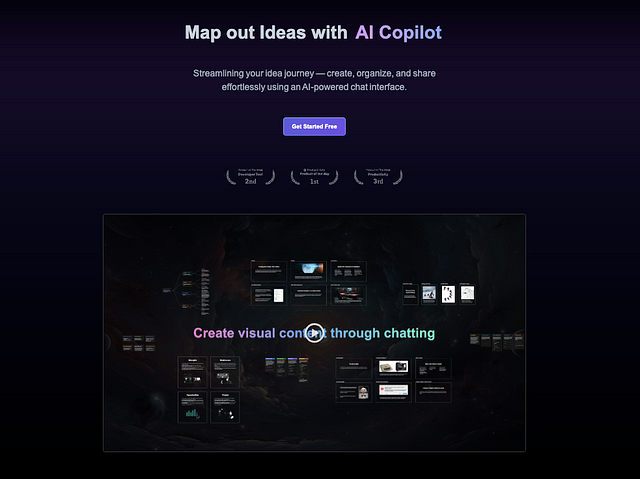
Miro is an AI-native app designed to streamline the process of brainstorming, studying, organizing, note-taking and presenting ideas.
Create stunning visual content (mind-maps, flowcharts, presentations, etc.) simply by chatting.
Miro helps convert your notes and structured essays into beautiful mind maps. It can create an easy-to-understand visual presentation from any idea or prompt.
Just enter a prompt, and you get a beautiful chart of your choice amongst the 2500+ free concept map templates. It makes me and my team understand everything faster,more efficient, and save a tonne of time.
I use it to create stunning mind maps, visual brainstorming, creating flowcharts and other presentations from my unorganized notes and ideas especially for my work, and studies.
This app has completely revolutionized the way I take notes and record my ideas, as someone who enjoys taking notes and jotting down every idea, this app is truly a game-changer.
It is another value-for-money tool that is dirt cheap compared to the amazing features it provides. Trust me, you will absolutely fall in love with this app’s simplicity, user experience, and ease of use.
Pricing: Freemium
I strongly recommend it to everyone. Definitely a must-have visual productivity tool in your list.
MIRO is truly your perfect day-to-day visual study/brainstorming/ideation buddy.
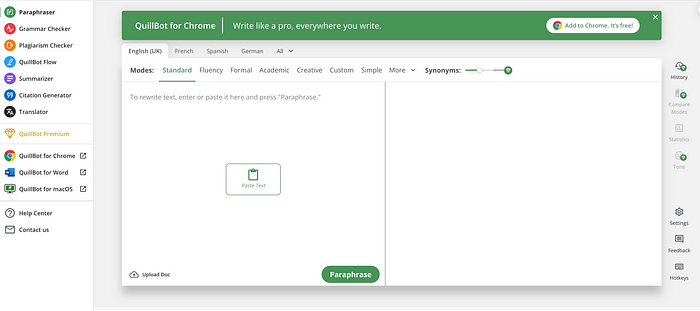
One great AI Productivity Writing tool I recently started using for day-to-day writing and tasks such as plagiarism checker, grammar checker, QuillBot-Flow , QuillBot AI Content Detector, Paraphraser, Summariser, and translator is QuillBot .
It is a great paraphrasing tool and can easily beat all the AI-content detectors out there.
I wanted to try something similar and cheaper than Grammarly(12$ per month).
I took up its yearly premium for around $4/month (58% off) . The price was literally dirt cheap compared to other writing tools I have used in the past.
I personally love QuillBot Flow, and the whole set of amazing writing tools it offers.
Personally, it’s UI and UX is very simple and easy to use. So I just wanted to share this awesome, productive tool with you all. Do check it out and use it in your day-to-day writing tasks.
It is literally a one-stop shop writing productivity tool for everyone.
I really insist you to go try the above tools out. Trust me, you won’t regret using these tools and will thank me later.
Let’s get started and check out these amazing AI bots that are the best alternatives to ChatGPT —
INDEX
- Miro
- Claude
- Taskade
- Perplexity
- Notion
- Jasper
- ChatSonic
1) Miro
MIRO helps convert your notes, ideas, and structured essays into beautiful mind maps. It can create easy-to-understand visual content from any idea or prompt. Create stunning visual content (mind-maps, flowcharts, graphs for data analysis, presentations, etc) simply by chatting.
Pros
- Visual Tools: Excellent for brainstorming, flowcharts, and presentations. One of the best out there in my opinion.
- Templates: Thousands of free concept map templates are available.
- Note-Taking: Revolutionizes note-taking and idea recording.
- Versatility: Ideal for work, research, brainstorming, and study-related projects.
Cons
- None found, to be honest. It’s an excellent tool overall a great visual content creation tool, and an awesome alternative to ChatGPT.
Try it here — https://miro.com/brainstorming/
2) Claude
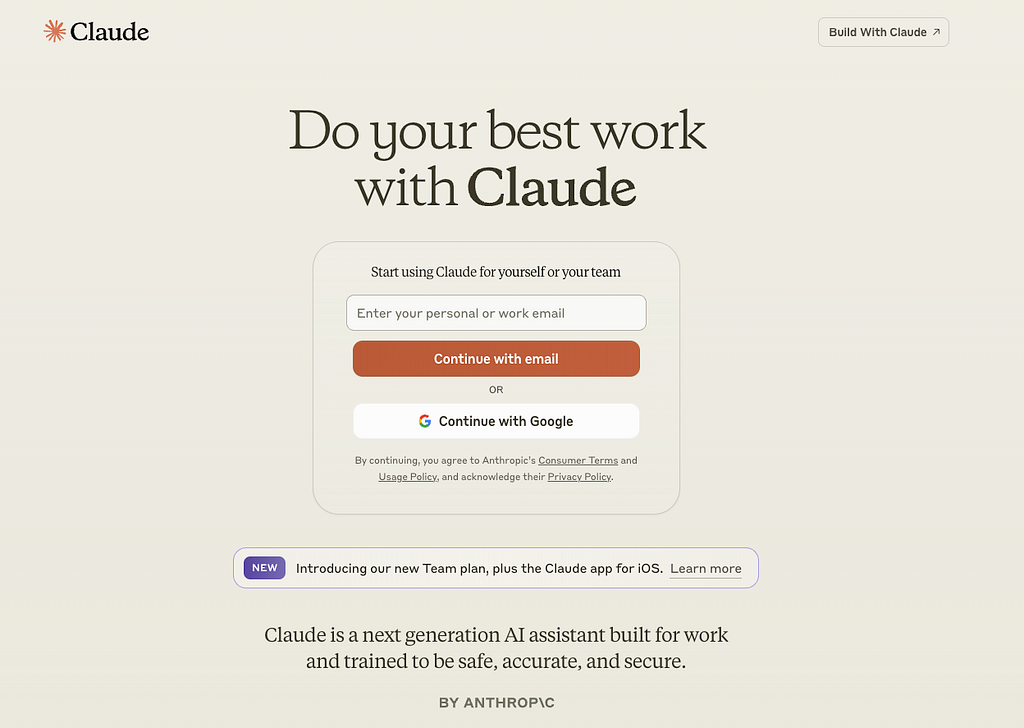
Best AI chatbot for image interpretation. I think the biggest advantage of this chatbot is its visual assistance. Even though ChatGPT can accept image and document inputs, I noticed that Claude can assist with interpreting images in a much faster manner.
Pros
- Upload document support
- Chat controls
- Light and dark mode
Cons
- Unclear usage cap
- Knowledge cutoff
Try it here — https://claude.ai/
3) Taskade
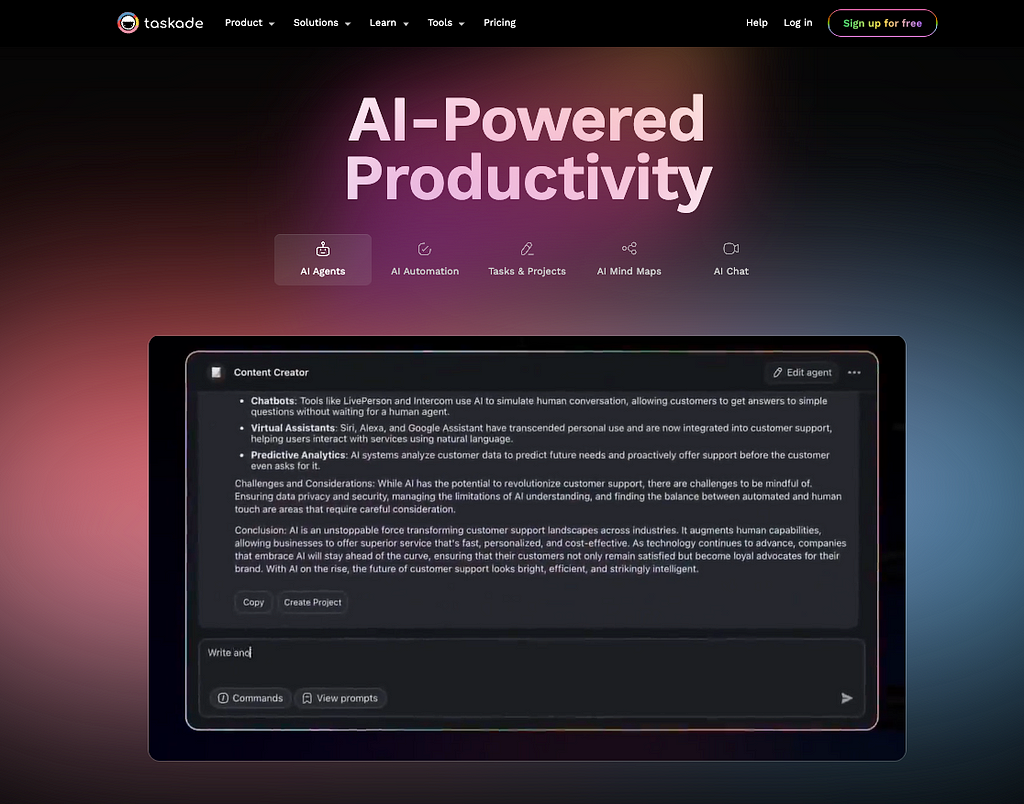
All-in-one AI productivity, ideation, writing, coding and mind-mapping, task/Project management app. Free to use with a value-for-money pro plan.
Pros
- Productivity Tool: Comprehensive AI-everything tool for writing and task management.
- AI Prompt Templates: Over 1000 templates for academic and productivity tasks.
- Versatile AI Agents: Research, coding, summarizing, tutoring, and content creation.
- One-Stop Shop: Integrated tool for all writing and productivity needs.
Cons
- Learning Curve: Requires time to explore and utilize all features.
Try it here — https://www.taskade.com/
4) Perplexity
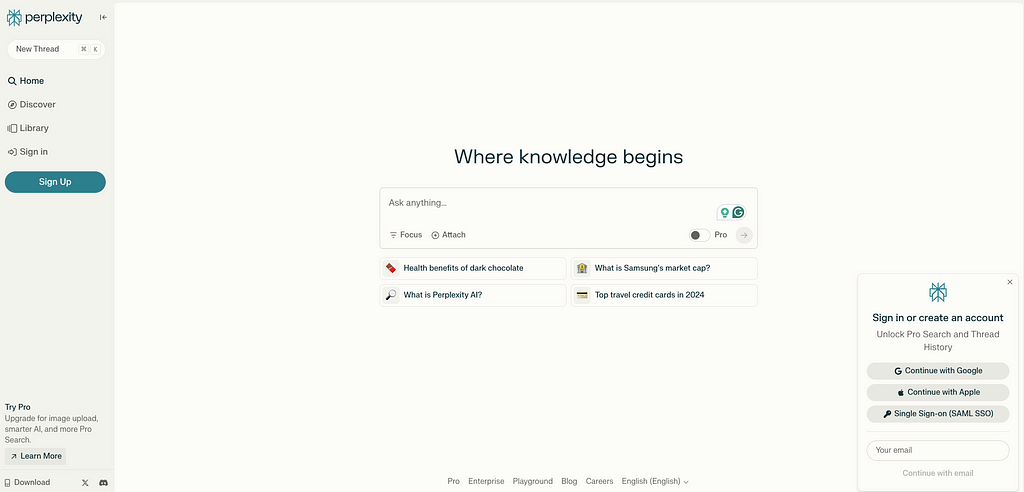
Focused on providing accurate and detailed answers, Perplexity AI is a go-to for research-based queries and in-depth explanations. Great tool for research with very low hallucinations and limited free usage.
Pros
- Links to sources
- Access to internet
- simple UI
- Provides prompt suggestions to get chats started
Cons
- Paid subscription required for GPT-4 access
- Some irrelevant suggestions
Try it here — https://www.perplexity.ai/
5) Notion
Pros
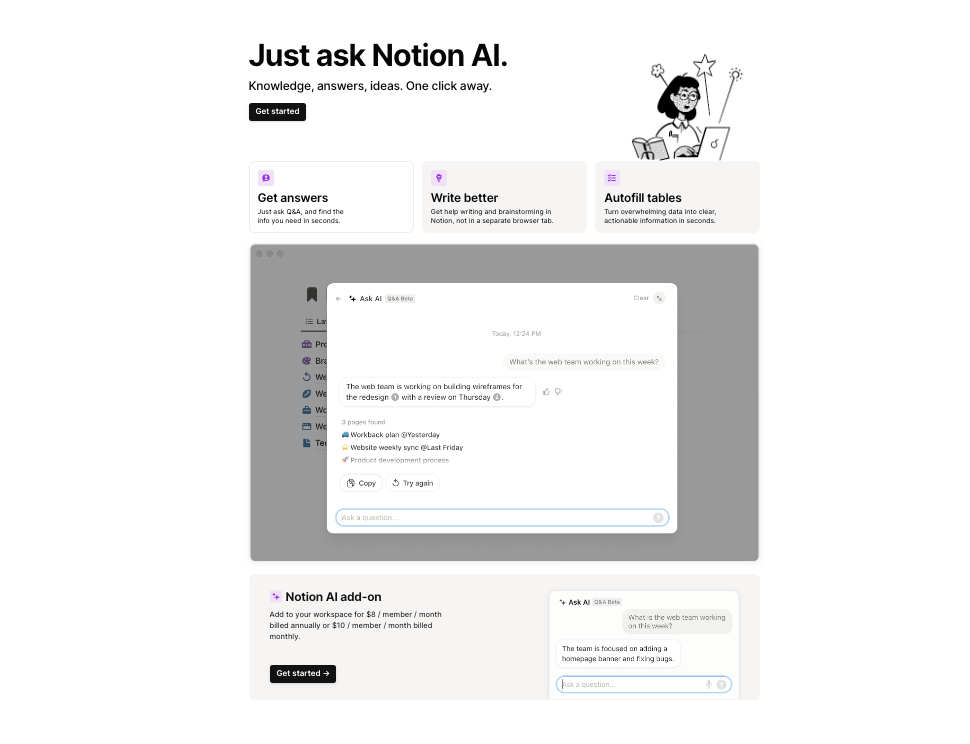
- All-in-One Tool: Comprehensive productivity and task management in one place.
- AI Integration: Competes with Google Docs and Microsoft Office, enhancing productivity.
- Knowledge Management: The industry leader in combining knowledge management and AI.
- Cost-Effective: Affordable with a wide range of features.
- Top-Ranked: Recognized as a leading productivity tool.
Cons
- Complexity: It may have a steep learning curve due to extensive features.
- Overwhelming: It can be overwhelming for new users to navigate all functionalities.
Try it here — https://www.notion.so/
6) Jasper AI
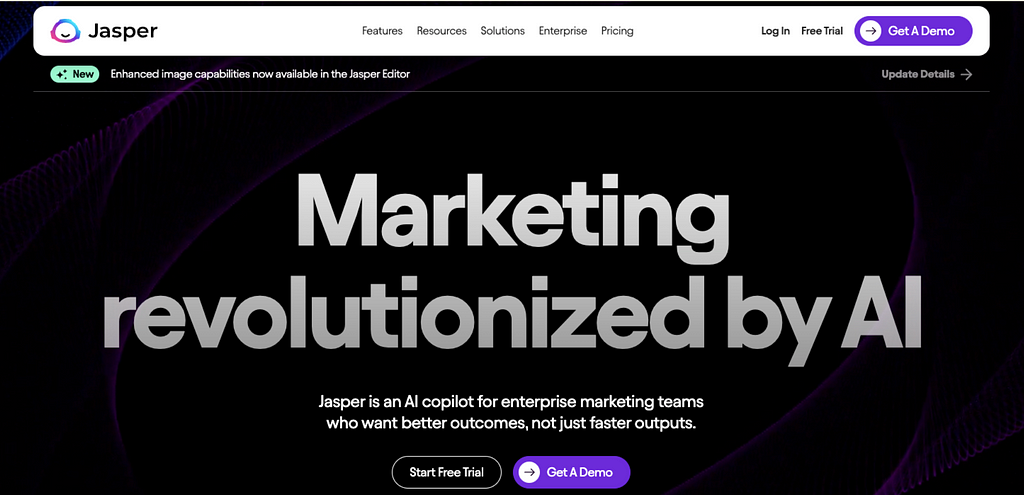
Jasper offers extensive tools to produce better results. It can check for grammar and plagiarism and write in over 50 templates, including blog posts, Twitter threads, video scripts, and more. It also offers SEO insights and can even remember your brand voice.
Pros
- 50 different writing templates
- Copyediting features
- Plagiarism checker
Cons
- Need a subscription to try
- Steep cost
Try it here — https://www.jasper.ai/
7) ChatSonic
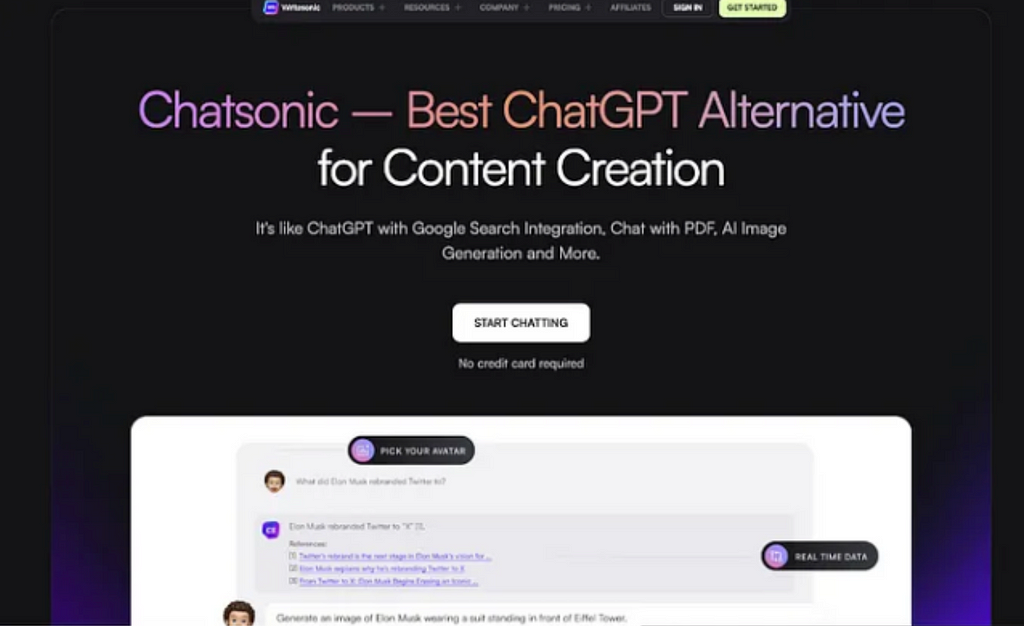
The Writesonic platform offers tools that help generate stories, including Instant Article Writer, which creates an article from a single click; Article Rewriter, which rephrases existing content; and Article Writer 5 & 6, which generates articles using ranking competitors and are SEO optimized.
Pros
- SEO tools — SEO Checker and Optimizer inbuilt
- Integration with Google Search
- Multiple Templates
- Creative Capabilities
- AI Personalities
Cons
- Word Limits
- Image Quality
Try it here — https://writesonic.com/chat
CONCLUSION
I hope you enjoyed reading this blog about some amazing free alternatives to ChatGPT out there, which can help you save some bucks and be super productive.
Do check out these AI ChatBots, save this post in your reading list, and bookmark them.
Awesome, you have reached the end and have already become smarter, more effective, and more productive just by learning about these awesome ChatGPT-4 alternatives and tools. The next step is to use them. Good luck!
The cheat sheet,save this, and keep it as a reference:
https://medium.com/media/0d0ac6f70de97d8c6f92bad88f4abd20/href
Please take something of value from this blog post and this cheat sheet.
Let’s harness the power of AI and technology to create a better future.
Top Free AI Chatbots: The Best Free ChatGPT Alternatives was originally published in Becoming Human: Artificial Intelligence Magazine on Medium, where people are continuing the conversation by highlighting and responding to this story.
Understanding Tokenization, Stemming, and Lemmatization in NLP
Natural Language Processing (NLP) involves various techniques to handle and analyze human language data. In this blog, we will explore three essential techniques: tokenization, stemming, and lemmatization. These techniques are foundational for many NLP applications, such as text preprocessing, sentiment analysis, and machine translation. Let’s delve into each technique, understand its purpose, pros and cons, and see how they can be implemented using Python’s NLTK library.

1. Tokenization
What is Tokenization?
Tokenization is the process of splitting a text into individual units, called tokens. These tokens can be words, sentences, or subwords. Tokenization helps break down complex text into manageable pieces for further processing and analysis.
Why is Tokenization Used?
Tokenization is the first step in text preprocessing. It transforms raw text into a format that can be analyzed. This process is essential for tasks such as text mining, information retrieval, and text classification.
Pros and Cons of Tokenization
Pros:
- Simplifies text processing by breaking text into smaller units.
- Facilitates further text analysis and NLP tasks.
Cons:
- Can be complex for languages without clear word boundaries.
- May not handle special characters and punctuation well.
Code Implementation
Here is an example of tokenization using the NLTK library:
# Install NLTK library
!pip install nltk
Explanation:
- !pip install nltk: This command installs the NLTK library, which is a powerful toolkit for NLP in Python.
# Sample text
tweet = "Sometimes to understand a word's meaning you need more than a definition. you need to see the word used in a sentence."
Explanation:
- tweet: This is a sample text we will use for tokenization. It contains multiple sentences and words.
# Importing required modules
import nltk
nltk.download('punkt')
Explanation:
- import nltk: This imports the NLTK library.
- nltk.download(‘punkt’): This downloads the ‘punkt’ tokenizer models, which are necessary for tokenization.
from nltk.tokenize import word_tokenize, sent_tokenize
Explanation:
- from nltk.tokenize import word_tokenize, sent_tokenize: This imports the word_tokenize and sent_tokenize functions from the NLTK library for word and sentence tokenization, respectively.
# Word Tokenization
text = "Hello! how are you?"
word_tok = word_tokenize(text)
print(word_tok)
Explanation:
- text: This is a simple sentence we will tokenize into words.
- word_tok = word_tokenize(text): This tokenizes the text into individual words.
- print(word_tok): This prints the list of word tokens. Output: [‘Hello’, ‘!’, ‘how’, ‘are’, ‘you’, ‘?’]
# Sentence Tokenization
sent_tok = sent_tokenize(tweet)
print(sent_tok)
Explanation:
- sent_tok = sent_tokenize(tweet): This tokenizes the tweet into individual sentences.
- print(sent_tok): This prints the list of sentence tokens. Output: [‘Sometimes to understand a word’s meaning you need more than a definition.’, ‘you need to see the word used in a sentence.’]
2. Stemming
What is Stemming?
Stemming is the process of reducing a word to its base or root form. It involves removing suffixes and prefixes from words to derive the stem.
Why is Stemming Used?
Stemming helps in normalizing words to their root form, which is useful in text mining and search engines. It reduces inflectional forms and derivationally related forms of a word to a common base form.
Pros and Cons of Stemming
Pros:
- Reduces the complexity of text by normalizing words.
- Improves the performance of search engines and information retrieval systems.
Cons:
- Can lead to incorrect base forms (e.g., ‘running’ to ‘run’, but ‘flying’ to ‘fli’).
- Different stemming algorithms may produce different results.
Code Implementation
Let’s see how to perform stemming using different algorithms:
Porter Stemmer:
from nltk.stem import PorterStemmer
stemming = PorterStemmer()
word = 'danced'
print(stemming.stem(word))
Explanation:
- from nltk.stem import PorterStemmer: This imports the PorterStemmer class from NLTK.
- stemming = PorterStemmer(): This creates an instance of the PorterStemmer.
- word = ‘danced’: This is the word we want to stem.
- print(stemming.stem(word)): This prints the stemmed form of the word ‘danced’. Output: danc
word = 'replacement'
print(stemming.stem(word))
Explanation:
- word = ‘replacement’: This is another word we want to stem.
- print(stemming.stem(word)): This prints the stemmed form of the word ‘replacement’. Output: replac
word = 'happiness'
print(stemming.stem(word))
Explanation:
- word = ‘happiness’: This is another word we want to stem.
- print(stemming.stem(word)): This prints the stemmed form of the word ‘happiness’. Output: happi
Lancaster Stemmer:
from nltk.stem import LancasterStemmer
stemming1 = LancasterStemmer()
word = 'happily'
print(stemming1.stem(word))
Explanation:
- from nltk.stem import LancasterStemmer: This imports the LancasterStemmer class from NLTK.
- stemming1 = LancasterStemmer(): This creates an instance of the LancasterStemmer.
- word = ‘happily’: This is the word we want to stem.
- print(stemming1.stem(word)): This prints the stemmed form of the word ‘happily’. Output: happy
Regular Expression Stemmer:
from nltk.stem import RegexpStemmer
stemming2 = RegexpStemmer('ing$|s$|e$|able$|ness$', min=3)
word = 'raining'
print(stemming2.stem(word))
Explanation:
- from nltk.stem import RegexpStemmer: This imports the RegexpStemmer class from NLTK.
- stemming2 = RegexpStemmer(‘ing$|s$|e$|able$|ness$’, min=3): This creates an instance of the RegexpStemmer with a regular expression pattern to match suffixes and a minimum stem length of 3 characters.
- word = ‘raining’: This is the word we want to stem.
- print(stemming2.stem(word)): This prints the stemmed form of the word ‘raining’. Output: rain
word = 'flying'
print(stemming2.stem(word))
Explanation:
- word = ‘flying’: This is another word we want to stem.
- print(stemming2.stem(word)): This prints the stemmed form of the word ‘flying’. Output: fly
word = 'happiness'
print(stemming2.stem(word))
Explanation:
- word = ‘happiness’: This is another word we want to stem.
- print(stemming2.stem(word)): This prints the stemmed form of the word ‘happiness’. Output: happy
Snowball Stemmer:
nltk.download("snowball_data")
from nltk.stem import SnowballStemmer
stemming3 = SnowballStemmer("english")
word = 'happiness'
print(stemming3.stem(word))
Explanation:
- nltk.download(“snowball_data”): This downloads the Snowball stemmer data.
- from nltk.stem import SnowballStemmer: This imports the SnowballStemmer class from NLTK.
- stemming3 = SnowballStemmer(“english”): This creates an instance of the SnowballStemmer for the English language.
- word = ‘happiness’: This is the word we want to stem.
- print(stemming3.stem(word)): This prints the stemmed form of the word ‘happiness’. Output: happy
stemming3 = SnowballStemmer("arabic")
word = 'تحلق'
print(stemming3.stem(word))
Explanation:
- stemming3 = SnowballStemmer(“arabic”): This creates an instance of the SnowballStemmer for the Arabic language.
- word = ‘تحلق’: This is an Arabic word we want to stem.
- print(stemming3.stem(word)): This prints the stemmed form of the word ‘تحلق’. Output: تحل
3. Lemmatization
What is Lemmatization?
Lemmatization is the process of reducing a word to its base or dictionary form, known as a lemma. Unlike stemming, lemmatization considers the context and converts the word to its meaningful base form.
Why is Lemmatization Used?
Lemmatization provides more accurate base forms compared to stemming. It is widely used in text analysis, chatbots, and NLP applications where understanding the context of words is essential.
Pros and Cons of Lemmatization
Pros:
- Produces more accurate base forms by considering the context.
- Useful for tasks requiring semantic understanding.
Cons:
- Requires more computational resources compared to stemming.
- Dependent on language-specific dictionaries.
Code Implementation
Here is how to perform lemmatization using the NLTK library:
# Download necessary data
nltk.download('wordnet')
Explanation:
- nltk.download(‘wordnet’): This command downloads the WordNet corpus, which is used by the WordNetLemmatizer for finding the lemmas of words.
from nltk.stem import WordNetLemmatizer
lemmatizer = WordNetLemmatizer()
Explanation:
- from nltk.stem import WordNetLemmatizer: This imports the WordNetLemmatizer class from NLTK.
- lemmatizer = WordNetLemmatizer(): This creates an instance of the WordNetLemmatizer.
print(lemmatizer.lemmatize('going', pos='v'))
Explanation:
- lemmatizer.lemmatize(‘going’, pos=’v’): This lemmatizes the word ‘going’ with the part of speech (POS) tag ‘v’ (verb). Output: go
# Lemmatizing a list of words with their respective POS tags
words = [("eating", 'v'), ("playing", 'v')]
for word, pos in words:
    print(lemmatizer.lemmatize(word, pos=pos))
Explanation:
- words = [(“eating”, ‘v’), (“playing”, ‘v’)]: This is a list of tuples where each tuple contains a word and its corresponding POS tag.
- for word, pos in words: This iterates through each tuple in the list.
- print(lemmatizer.lemmatize(word, pos=pos)): This prints the lemmatized form of each word based on its POS tag. Outputs: eat, play
Applications in NLP
- Tokenization is used in text preprocessing, sentiment analysis, and language modeling.
- Stemming is useful for search engines, information retrieval, and text mining.
- Lemmatization is essential for chatbots, text classification, and semantic analysis.
Conclusion
Tokenization, stemming, and lemmatization are crucial techniques in NLP. They transform the raw text into a format suitable for analysis and help in understanding the structure and meaning of the text. By applying these techniques, we can enhance the performance of various NLP applications.
Feel free to experiment with the provided code snippets and explore these techniques further. Happy coding!
This brings us to the end of this article. I hope you have understood everything clearly. Make sure you practice as much as possible.
If you wish to check out more resources related to Data Science, Machine Learning and Deep Learning you can refer to my Github account.
You can connect with me on LinkedIn — RAVJOT SINGH.
I hope you like my article. From a future perspective, you can try other algorithms also, or choose different values of parameters to improve the accuracy even further. Please feel free to share your thoughts and ideas.
P.S. Claps and follows are highly appreciated.
Understanding Tokenization, Stemming, and Lemmatization in NLP was originally published in Becoming Human: Artificial Intelligence Magazine on Medium, where people are continuing the conversation by highlighting and responding to this story.
Top AI chatbots of 2024
How Cybersecurity and AI Work Together?
CuspAI Raises $30M Seed Round for AI-Powered Material Search Engine
Smart Factories: Concepts and Features
Exploring how new technologies, including artificial intelligence (AI), revolutionize manufacturing processes.
A smart factory is a cyber-physical system that leverages advanced technologies to analyze data, automate processes, and learn continuously. It’s part of the Industry 4.0 transformation, which combines digitalization and intelligent automation. Here are some key features:
- Interconnected Network: Smart factories integrate machines, communication mechanisms, and computing power. They form an interconnected ecosystem where data flows seamlessly.
- Advanced Technologies: Smart factories use AI, machine learning, and robotics to optimize operations. These technologies enable real-time decision-making and adaptability.
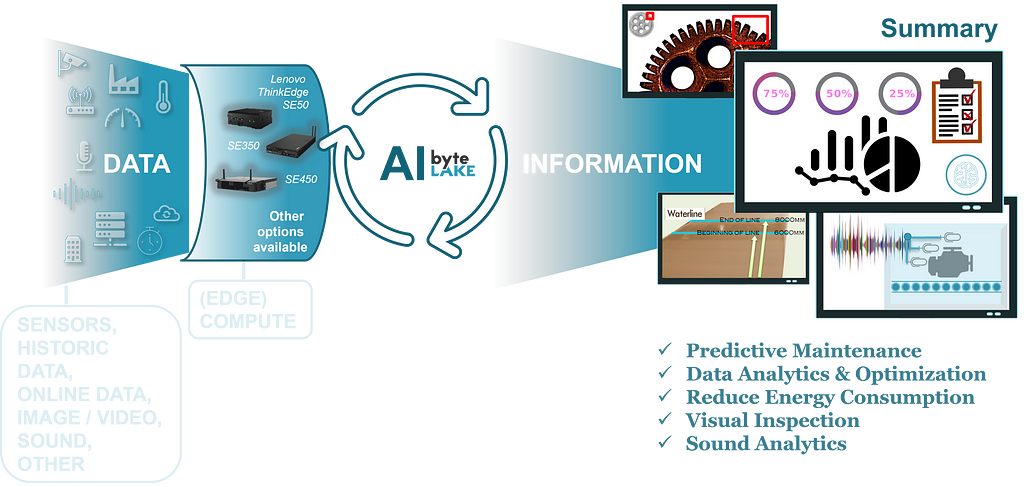
- Data-Driven Insights: Sensors collect data from equipment, production lines, and supply chains. AI processes this data to improve efficiency, quality, and predictive maintenance.

Automation, Robots, and AI on the Factory Floor
1. Production Automation
- Robotic Arms: Robots handle repetitive tasks like assembly, welding, and material handling. They enhance precision and speed.
- Collaborative Robots: These work alongside humans, assisting with tasks like packaging, quality control, and logistics.
2. Quality Inspection
- Visual Inspection: AI-powered computer vision systems analyze images or videos to detect defects, ensuring product quality. For instance, a custom Convolutional Neural Network (CNN) can achieve 99.86% accuracy in inspecting casting products.
- Sound Analytics: AI algorithms process audio data to identify anomalies (e.g., machinery malfunctions) based on sound patterns.
3. IoT + AI: Predictive Maintenance and Energy Efficiency
- Predictive Maintenance (IoT Sensors): Connected sensors monitor equipment health. AI algorithms predict failures, allowing timely maintenance. This minimizes unplanned downtime and reduces costs.
- Energy Management and Energy Consumption Analysis: AI analyzes vast data sets to optimize energy usage. It helps reduce waste, manage various energy sources, and enhance sustainability.
- Predictive Energy Demand: AI predicts energy demand patterns, aiding efficient resource allocation.
AI-Driven Energy Management in Smart Factories
1. Real-Time Energy Optimization
- IoT Data Integration: Smart factories deploy IoT sensors across their infrastructure to collect real-time data on energy consumption. These sensors monitor machinery, lighting, HVAC systems, and other energy-intensive components.
- Weather Forecast Integration: By combining IoT data with weather forecasts, AI algorithms predict energy demand variations. For example: when a heatwave is predicted, the factory can pre-cool the facility during off-peak hours to reduce energy costs during peak demand.
2. Dynamic Energy Source Selection
- Production Schedules and Energy Sources: AI analyzes production schedules, demand patterns, and energy prices. It optimally selects energy sources (e.g., solar, grid, and battery storage) based on cost and availability. For example: during high-demand production hours, the factory might rely on grid power. At night or during low-demand periods, it switches to stored energy from batteries or renewable sources.
3. Predictive Maintenance and Energy Efficiency
- Predictive Maintenance: AI predicts equipment failures, preventing unplanned downtime. Well-maintained machinery operates more efficiently, reducing energy waste.
- Energy-Efficient Equipment: AI identifies energy-hungry equipment and suggests upgrades or replacements. For instance: replacing old motors with energy-efficient ones, installing variable frequency drives (VFDs) to optimize motor speed, and others.
4. Demand Response and Load Shifting
- Demand Response Programs: AI participates in utility demand response programs. When the grid is stressed, the factory reduces non-essential loads or switches to backup power.
- Load Shifting: AI shifts energy-intensive processes to off-peak hours. For example: running heavy machinery during nighttime when electricity rates are lower, charging electric forklifts during off-peak hours, etc.

Benefits and Dollar Savings
- Reduced Energy Bills: By optimizing energy usage, factories save on electricity costs.
- Carbon Footprint Reduction: Efficient energy management leads to lower greenhouse gas emissions.
- Operational Efficiency: Fewer breakdowns and smoother operations improve overall productivity.
- Example: A smart factory in Ohio reduced its energy costs by 15% through AI-driven energy management, resulting in annual savings of $500,000.
AI and IoT empower smart factories to make data-driven decisions, minimize waste, and contribute to a more sustainable future. Dollar savings, environmental benefits, and operational efficiency go hand in hand.
Moreover, implementing automated visual inspection and AI-driven predictive maintenance in factories enables more benefits like:
Reduced Downtime:
- Predictive Maintenance: By identifying potential equipment failures before they occur, factories can schedule maintenance during planned downtime. This minimizes unplanned interruptions and keeps production lines running smoothly.
Enhanced Quality Control:
- Automated Visual Inspection: AI-powered systems detect defects, inconsistencies, or deviations in real-time. This ensures that only high-quality products reach the market.
- Cost Savings: Fewer defective products mean less waste and rework, leading to cost savings.
Optimized Resource Allocation:
- Energy Efficiency: AI analyzes energy consumption patterns and suggests adjustments. Factories can allocate resources (such as electricity, water, and raw materials) more efficiently.
- Resource Cost Reduction: By using resources judiciously, factories reduce expenses.
Improved Safety:
- Predictive Maintenance: Well-maintained machinery is less likely to malfunction, reducing safety risks for workers.
- Visual Inspection: Detecting safety hazards (e.g., loose bolts, and faulty wiring) prevents accidents.
Streamlined Inventory Management:
- Predictive Maintenance: AI predicts spare part requirements. Factories maintain optimal inventory levels, avoiding overstocking or stockouts.
- Cost Savings: Efficient inventory management reduces storage costs and ensures timely replacements.
Better Workforce Utilization:
- Predictive Maintenance: Workers focus on value-added tasks instead of emergency repairs.
- Visual Inspection: Skilled workers can focus on complex inspections, while AI handles routine checks.
Reduced Environmental Impact:
- Energy Efficiency: By optimizing energy usage, factories contribute to sustainability goals and reduce their carbon footprint.
- Waste Reduction: Fewer defects mean less waste, benefiting the environment.
Smart factories leverage technologies like AI, IoT, and advanced robotics to optimize efficiency, quality, and competitiveness. Benefits include reduced downtime, increased operational efficiency, improved product quality, enhanced worker safety, and greater flexibility in responding to market demands.
These technologies not only enhance efficiency but also lead to tangible cost savings, improved safety, and a more sustainable manufacturing ecosystem. Overall, the adoption of smart factory technologies leads to tangible benefits, cost savings, and operational improvements.
Beyond the Factory Floor: AI in Back Office Automation
While AI plays a crucial role on the factory floor, its impact extends beyond production lines. Back-office automation is equally vital. Here are a few examples:
- Financial Analysis: AI analyzes financial data, detects anomalies, and predicts market trends. CFOs and financial analysts benefit from faster insights and better decision-making.
- Contract Review: Legal teams use generative AI to review contracts, identifying potential issues more accurately.
- HR Automation: Generative AI streamlines employee onboarding and many other tasks, once performed by HR teams. These include benefits administration, payroll processing, chatbots handling routine HR inquiries, etc.
- Document Processing: AI automates data entry, invoice processing, e-mail management, so administrative teams can focus on higher-value work.
In summary, AI transforms not only the factory floor but also the entire organizational ecosystem.

Learn more:
- What Is a Smart Factory? | NetSuite
- The smart factory (deloitte.com)
- DUP_The-smart-factory.pdf (deloitte.com)
- Micromachines | Free Full-Text | Artificial Intelligence-Based Smart Quality Inspection for Manufacturing (mdpi.com)
- Inspection robot basics: A 101 guide to automated quality assurance — Standard Bots
- The Future of Manufacturing: Integrating Cobots and AI for Quality Inspection | Quality Digest
- Role of IoT in Predictive Maintenance: Things to Know (intuz.com)
- IoT Predictive Maintenance | AspenTech
- IoT Predictive Maintenance: Components, Use Cases & Benefits (xyte.io)
- AI, Machine Learning and the Future of the Back Office (artsyltech.com)
- How AI Consulting Can Help Businesses to Automate Their Back-office Operations | RTS Labs
- 5 ways generative AI could change back-office operations | Pega
- 43 Back Office Automation Examples in 2024: RPA, WLA, AI/ML (aimultiple.com)
Smart Factories: Concepts and Features was originally published in Becoming Human: Artificial Intelligence Magazine on Medium, where people are continuing the conversation by highlighting and responding to this story.