Energy and Utility Companies are Ready for AI — Let’s Explore the Benefits.
Energy and Utility Companies are Ready for AI — Let’s Explore the Benefits.
Explore byteLAKE’s Data Insights: Fueling Efficiency, Sustainability, and Cost Reductions in Energy and Utility Sectors through AI Integration.
According to a study in the article, Utilities say they’re ready for AI. Where should they start? (power-grid.com, close to 75% of energy and utility companies have either adopted AI or are actively considering its integration into their operations. It’s no surprise to me, given that Artificial Intelligence (AI) plays a crucial role in transforming energy utilities and powering smart cities. Here are some ways AI is making an impact:
- Smart City Initiatives: AI helps optimize utility operations in smart cities. By analyzing vast amounts of data, it contributes to sustainability and efficiency. For example, geospatial analysis tools assist cities in preemptively managing road maintenance costs.
- Real-Time Insights: Energy firms and grid operators integrate AI, machine learning (ML), and the Internet of Things (IoT) to capture real-time data. This enables optimal product and service delivery.
- Enhancing Security: AI technologies analyze extensive data to identify patterns indicating cyber threats within power grids, bolstering security.
- Energy Projections: AI assists in discovering new energy projections and optimizing production from existing infrastructures in the energy and utilities industry.
Just looking at these examples, AI is a driving force behind sustainable energy practices and smarter cities.
But let’s start from the beginning. What is AI? Artificial intelligence (AI) comprises a collection of algorithms that have the remarkable ability to transform various types of data, including images, sounds, videos, and sensor data, into valuable insights and actionable information. By integrating AI with online forecasts, such as weather predictions, and real-time inputs from operators, AI systems can analyze vast amounts of data to identify patterns, optimize maintenance tasks, suggest optimal machinery settings, and support decision-making processes aimed at reducing overall energy consumption and improving efficiency.
Utilities companies are under increasing pressure to optimize their operations, reduce costs, and minimize their environmental impact. With AI, utility companies can automate operations, optimize costs, reduce energy consumption, and lower their carbon footprint, all while enhancing overall efficiency and performance.
One of the key advantages of AI in utilities is its ability to leverage vast amounts of data from various sources, including IoT devices, historical data, online data, and weather forecasts. By harnessing this data, AI can dynamically adjust energy pricing to synchronize with demand fluctuations, helping utility companies maximize revenue while ensuring cost-effectiveness for consumers. Additionally, AI can analyze this data to suggest strategies for lowering energy costs, optimizing consumption, and reducing waste, ultimately leading to a more sustainable and efficient energy ecosystem.
In the context of smart cities, AI plays a pivotal role in orchestrating various interconnected systems to enhance overall functionality and livability. By integrating AI into smart city infrastructure, companies can optimize energy management, improve resource allocation, and enhance overall sustainability.
Take a moment to explore the illustration below, depicting the typical deployment of byteLAKE’s Data Insights in both Smart City and Smart Factory contexts. In the Smart City scenario, AI integrated into Data Insights harnesses data from SCADA systems (Supervisory Control and Data Acquisition), empowering utility companies to optimize their operations effectively. By analyzing this data, the AI suggests the ideal supply temperature required to deliver the necessary heat level to all infrastructure nodes while simultaneously reducing overall costs. Moreover, byteLAKE’s Data Insights utilizes AI to optimize costs and minimize energy losses in district heating networks and factories. For instance, even a slight reduction in flow temperature, say by 1–2 degrees, can translate into substantial savings, amounting to millions of euros annually. Furthermore, Data Insights offers additional benefits, such as forecasting and optimization, predictive maintenance, and robust monitoring and management capabilities. Through AI-driven insights, utility companies can proactively address challenges, streamline operations, and enhance overall efficiency, thereby fostering a sustainable and resilient energy ecosystem.
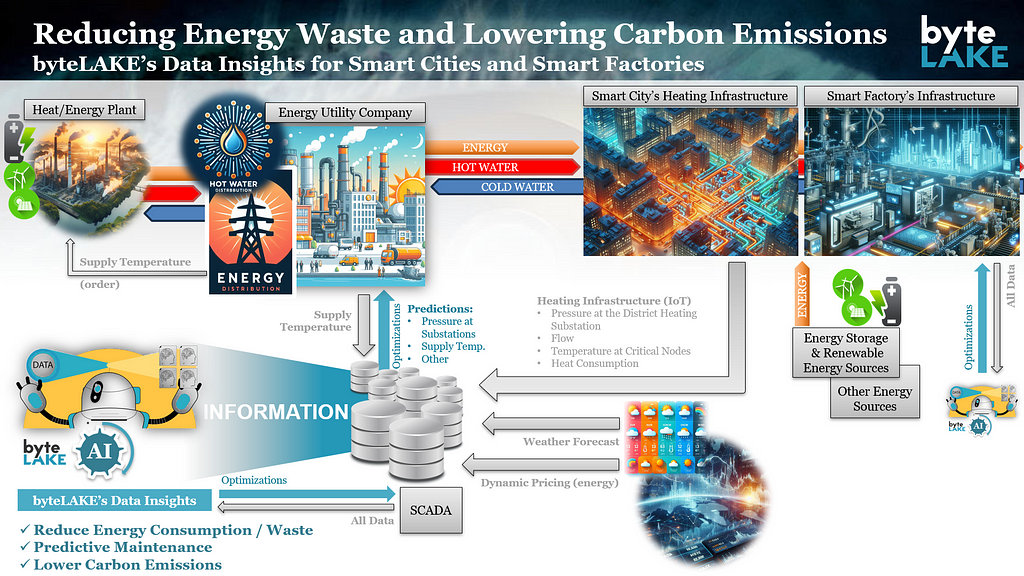
In smart factory settings, AI is revolutionizing energy management by optimizing the utilization of different energy sources. By analyzing data from SCADA systems, sensors, weather forecasts, and other sources, AI can forecast energy demand and optimize the operation of heating plants, reducing costs and ensuring efficient heat distribution. Additionally, AI can predict equipment failures and maintenance needs, enabling proactive maintenance to avoid unexpected downtime and optimize overall operational efficiency. Furthermore, AI algorithms can monitor production lines, detect errors, and improve remote management of individual elements, ensuring smooth and uninterrupted operation.
For example, AI can optimize the management of different energy sources, based on contracts with Utility companies, but also renewable energy, and other sources, by combining data from weather forecasts, schedules, shifts, and planned activities. This enables Smart Factories to develop proactive strategies to optimize energy consumption, reduce waste, and lower carbon emissions, ultimately contributing to a greener and more sustainable future.
byteLAKE’s Data Insights uses AI to optimize costs and reduce energy losses in district heating networks and factories. For example, reducing the flow temperature by just 1–2 degrees can save millions of euros per year.
In summary, AI is transforming Utilities, Smart Cities, and Smart Factories by revolutionizing energy management, optimizing costs, and reducing environmental impact. By harnessing the power of AI, Utility companies can automate operations, optimize energy consumption, and enhance overall sustainability, paving the way for a more efficient and greener future. With AI-driven solutions, companies can stay ahead of the curve, driving innovation and delivering value to both consumers and the environment.
If you want to learn more, you might find these articles interesting as they are related to the industrial AI subject:
- A Comprehensive Guide to Deploying AI in Industries: From Idea to Deployment | by Marcin Rojek | Apr, 2024 | Medium
- Harnessing the Power of AI and IoT: Revolutionizing Data Insights for Industry 4.0 | by Marcin Rojek | Apr, 2024 | Becoming Human: Artificial Intelligence Magazine
https://medium.com/media/a4b6a14acf115882e6876ab485c50b86/href
Energy and Utility Companies are Ready for AI — Let’s Explore the Benefits. was originally published in Becoming Human: Artificial Intelligence Magazine on Medium, where people are continuing the conversation by highlighting and responding to this story.
How is AI Helping Indian Railways
SoundHound AI, Perplexity Collaborate for Next-Gen Voice Assistants in IoT
Google DeepMind’s AlphaFold Unveiling Potential in Biology
Microsoft Introduces AI-Powered Copilot Features to Enhance Microsoft 365
AI is… about FINDING ANSWERS in the DATA.
We all collect data. So do all industries. But what’s the first step in planning the AI transformation? Finding a scenario where AI could help.
I’ve been writing about AI for quite some time now. Through numerous webinars and discussions, I’ve come to a conclusion: perhaps I’ve been focusing too much on the implementation and deployment of AI. During these conversations, it became evident that many industry leaders face a common challenge — they struggle to identify a starting point for integrating AI into their operations.
The more I engage with industry professionals, the more I understand the critical importance of addressing the fundamental question: Where does one begin the journey towards AI integration?
Before AI can even grace the agenda of workshops or meetings, organizations grapple with the daunting task of pinpointing how and where AI can be leveraged to drive meaningful impact. It’s not merely about deploying AI; it’s about finding the right scenario, the pivotal moment where AI can unravel insights and catalyze transformation.
This blog post will focus on just that: a list of a few pathways you can consider while jogging, swimming, surfing, or engaging in any activity before you jump into your car and head to meet your teams.
So what’s AI? While there are many definitions, we at byteLAKE say that AI is about transforming DATA into ACTIONABLE INSIGHTS.
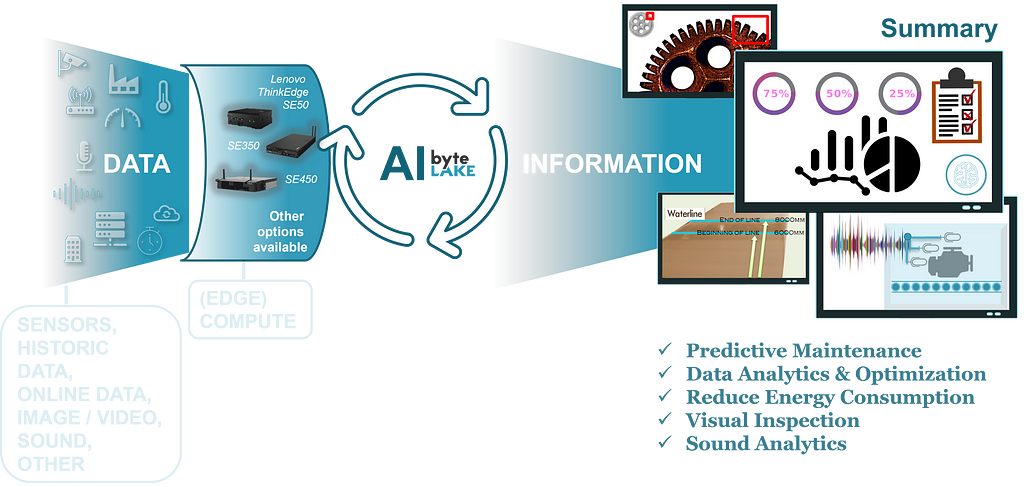
And now, where could be your starting point for AI
If you happen to work in manufacturing, consider these scenarios:
- Automated visual inspection of products, parts, and components: cameras can help you automate quality inspections, detecting scratches, dents, paint chips, etc. AI can analyze images of your products and validate colors, prints, labels, etc.
- IoT sensors data analytics typically leads to implementing scenarios like predictive maintenance for better insights into processes, lowering the amount of unplanned downtimes, detecting risks earlier, etc.
- General data analytics typically helps find optimal setups or configurations to reduce energy consumption, identify reasons for incidents, etc.
In logistics, AI is typically used to automate counting, ensuring the quality of shipments, etc. A common phrase I have been hearing in that sector is along the lines of: if we ship too many products, hardly ever someone informs us about that. But, if we forget to send anything, we always get complaints which impact our reputation. Therefore, if working in logistics, think of scenarios where:
- Cameras can help you count products, analyze what you put into containers and, for instance, trigger an alarm if the wrong barcode or an expired product is detected.
- AI can count boxes, automate inventory processes, and, very much like in manufacturing, monitor overall quality: checking labels, validating documents, inspecting packaging, etc.
I need to explicitly mention the paper industry as we have been delivering AI solutions there for many years now. I assume that not many of my readers know, but AI can visually inspect the whole process and, for instance, detect quality issues in the paper sheets, boxes (i.e., missing prints, wrong labels), or monitor the papermaking process by measuring and analyzing the so-called wet line, aka waterline.
The automotive industry, another exciting sector with huge potential for AI, has seen significant progress. Most of the already mentioned aspects would apply there as well. Besides visual inspections and data analytics, sound analytics is embraced on assembly lines. AI can, for instance, analyze the sound produced by car engines or various car components like pumps, bearings, etc., and detect nuances that can identify faults or errors.
Let me finish this blog post by mentioning the energy sector where AI can, for instance, help you analyze all the data generated by various sensors attached across your infrastructure and suggest, for instance, optimal settings to minimize downtimes, reduce overall energy consumption, or improve reliability and client satisfaction.
can help you find answers within the vast expanse of data, enabling data-driven decisions. It can take into account readings from IoT sensors as well as your teams by analyzing their inputs, combining all of these with online data like weather forecasts, regulations, etc., and taking actions to minimize risks, identify issues, and suggest optimizations.
And I could continue listing other examples as basically EVERY industry has areas where AI can easily automate or optimize various operations. And of course, AI is not just a camera or intelligent sensor. It typically builds up into a robotic arm or a software system that either moves things around and AI becomes just a set of workers focused on certain things like:
- AI-robot #1 performs visual inspection
- AI-robot #2 performs data analytics
- …
- AI-robot #n consolidates all of these and turns everything into information: SET parameters X, Y, Z to A, B, C, respectively to reduce energy consumption by 30%, avoid downtimes and send maintenance teams to area #41 and #51.
Although there are other areas where AI can help like, for instance, the back office of all mentioned industries (document processing, boring office task automation, etc.), I hope this blog post will still help at least some of you identify the first one or yet another area where to start your next AI journey. Have a great weekend!
https://medium.com/media/20f6637885c3f261f9c27f3a9f60951b/href
AI is… about FINDING ANSWERS in the DATA. was originally published in Becoming Human: Artificial Intelligence Magazine on Medium, where people are continuing the conversation by highlighting and responding to this story.
Nowruz Wisdom: Learning from the Haft-Seen for a Tech-Forward Future

Happy Nowruz. As we usher in the spring season, let’s embrace the wisdom of the traditional Haft-Seen table.
Celebrated by around 300 million people globally, including many across the United States, Nowruz marks the first day of Spring and the New Year. The Haft-Seen, with its seven symbolic items each beginning with the letter ‘S’ in Persian, offers lessons for our journey through the new digital age:
- Sabzeh (Sprouts) — Just as sprouts signify new beginnings, AI represents a new era of growth and innovation. We’re reminded to embrace change and the fresh perspectives it brings.
- Sumac (Spice of Life) — Sumac, with its vibrant color and flavor, symbolizes the diversity and richness of life. It’s a call to ensure that AI adds value and diversity to our existence, not just efficiency.
- Samanu (Sweet Pudding) — The intricate process of making Samanu reflects the complexity behind AI technologies. It teaches us that patience and careful cultivation can lead to rewarding outcomes.
- Senjed (Dried Oleaster Fruit) — Senjed symbolizes love, reminding us to maintain humanity and empathy in a world increasingly run by algorithms. Ensuring AI enhances human connections is crucial.
- Seer (Garlic) — Garlic, known for its medicinal properties, can be likened to the role of AI in healthcare—offering the potential for healing and fostering well-being.
- Seeb (Apple) — The apple represents beauty, reminding us that in our pursuit of technological advancement, we should also appreciate and cultivate the aesthetic and creative aspects of life.
- Serkeh (Vinegar) — Vinegar symbolizes age and patience. It teaches us that while technology moves fast, patience and persistence are vital in ensuring sustainable and thoughtful progress.

In addition to the seven “S” items of the Haft-Seen, the Nowruz table often includes a mirror, a book of poetry, candles, a goldfish in a bowl, hyacinth, sweets, and coins, each gaining new significance as I get older. The mirror encourages introspection in a digital world, reflecting our values against the backdrop of technology.
Poetry preserves the essence of emotion and art. Candles symbolize the human spirit’s resilience against technological domination. The goldfish, in its fluid grace, reminds us of life’s vitality within structured environments. Hyacinths represent the integration of nature with technology, emphasizing growth and renewal.
Sweets remind us to savor life’s joys and connections beyond digital interactions. Lastly, coins point to new economic dynamics that await us.
As my family and I celebrate the Nowruz season, these reflections from the Haft-Seen table inspire me to meet the future with a blend of tradition and innovation. Wishing everyone a Nowruz filled with growth, health, and joyful discovery.
This content was crafted with the assistance of artificial intelligence, which contributed to structuring the narrative, ensuring grammatical accuracy, and summarizing key points to enhance the readability and coherence of the material.
Nowruz Wisdom: Learning from the Haft-Seen for a Tech-Forward Future was originally published in Becoming Human: Artificial Intelligence Magazine on Medium, where people are continuing the conversation by highlighting and responding to this story.
Automated Quality Inspection for Automotive — AI in Action
Automated Quality Inspection for Automotive — AI in Action
In the world of automobile manufacturing, quality is the cornerstone of a brand’s reputation and success. Ensuring the production of flawless vehicles is a meticulous task, and it often involves multiple forms of inspection along the assembly line. Visual inspections, aerodynamic optimization, and increasingly, sound analytics, all play critical roles in achieving excellence.
This blog post shines a spotlight on the captivating realm of sound analytics, a vital component of quality inspection, and the technological advancements byteLAKE, Intel® and Lenovo are going to showcase at the upcoming SC23 conference in Denver, Colorado.
Check out my other two posts in this three-part mini-series, where I provide summaries of byteLAKE’s plans for SC23 and the technologies we will be demonstrating there:
- AI is everywhere, but what more can it bring to Manufacturing and Automotive in specifics? Explore these AI solutions during the SC23 conference in Denver, Colorado. | by Marcin Rojek | Oct, 2023 | Medium
- Accelerating Time to Insights for Automotive — Live Demo and Presentation at SC23 in Denver, Colorado. | by Marcin Rojek | Nov, 2023 | Medium.
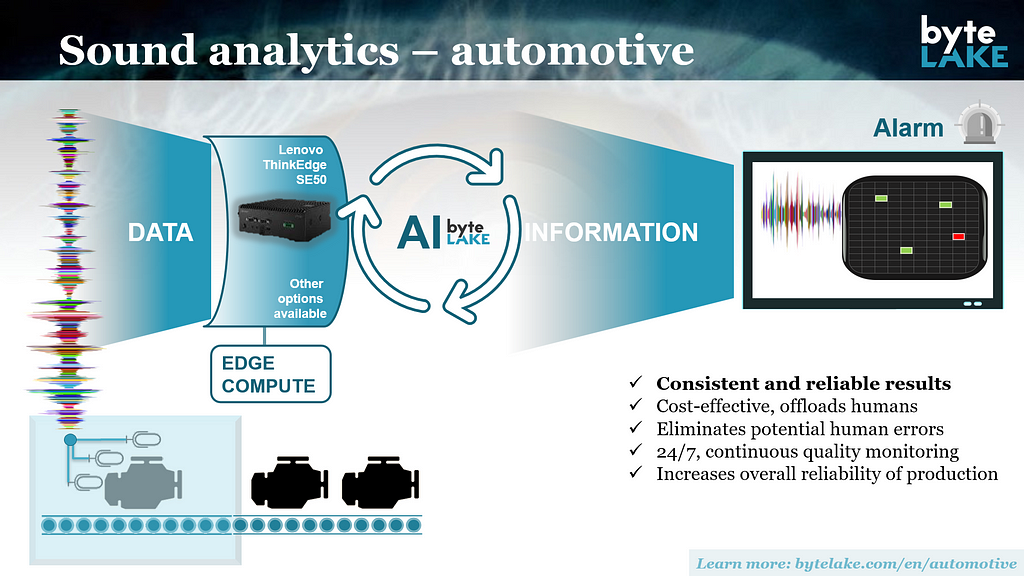
Sound Analytics: A Symphony of Quality Assurance
Imagine this: Microphones connected to highly-trained AI models, diligently record the symphony of sounds produced by car engines as they come to life. These AI systems are not just listening; they’re meticulously dissecting each note to detect irregularities, inconsistencies, or potential issues. In an era where excellence is non-negotiable, AI-driven sound analytics is taking the wheel.
But why the emphasis on sound analytics? Because it goes beyond mere quality control. By pinpointing issues during the assembly process, this technology doesn’t just bolster production efficiency; it also enhances the end-user experience. Fewer recalls, increased reliability, and a sterling reputation are just a few of the dividends paid by the integration of AI into the quality control process.
Humans and AI: The Power of Synergy
It’s essential to clarify that AI isn’t here to replace the human touch but to complement and empower it. In fact, AI serves as a force multiplier for human operators, exponentially increasing accuracy. For example, when humans monitor quality, they might achieve, say, 80% accuracy. When humans and AI join forces, that number skyrockets to 99%. Not to mention, AI never tires or gets bored, making it an invaluable asset for maintaining stringent quality control standards 24/7 in demanding, noisy environments.

The magic happens when humans leverage these tools to unleash their own creative potential. As AI takes on routine and repetitive tasks, humans are liberated to innovate and pioneer new approaches. The introduction of AI into the manufacturing landscape is akin to giving inventors a new set of tools and, ultimately, broadening the horizons of possibility.
The Edge of Manufacturing
In manufacturing, data processing must often occur close to the source and in real time. Enter Edge Computing, a technology that’s at the heart of contemporary manufacturing. It’s the engine that drives AI analytics, ensuring that issues are identified as they arise. While cloud solutions have their place for backup and extensive data storage, Edge AI is the real-time answer.

Optimizing the Future: Edge AI and Beyond
The Inference market, a pivotal component of AI, is set to grow exponentially, forecasted to be four times the size of the AI training market, with a long tail that extends far and wide.
Scalability is the name of the game, and we’re determined to put the future of manufacturing in the hands of innovation pioneers.
https://medium.com/media/d2099a2634560d71624e2a7fe6f1c622/href
Automated Quality Inspection for Automotive — AI in Action was originally published in Becoming Human: Artificial Intelligence Magazine on Medium, where people are continuing the conversation by highlighting and responding to this story.
Impact of AI Coaches on India’s Thriving Startup Ecosystem
Beyond Human Bounds
The Spectrum Of Potential Consciousness Types In Diverse Life Forms Across The Cosmos

The evolution of consciousness, particularly as it veers towards spiral models, is a cosmic journey for humanity and for all life forms across the universe. As we step into the realms of space exploration and encounter varied planetary environments, the canvas of potential consciousness types broadens immensely. This article, drawing inspiration from the TING Consciousness Scale, explores the myriad possibilities of consciousness evolution among diverse life forms, highlighting the transition from egoism to altruism as a universal path towards higher collective awareness and harmony.
The Spectrum of Consciousness in Diverse Life Forms:
Consciousness, as we understand it, varies significantly across different life forms. From the basic sensory awareness in single-celled organisms to the complex self-awareness in humans, consciousness manifests in multifaceted forms. This spectrum becomes even more intriguing when we consider extraterrestrial life forms, each adapted to its unique environment, potentially developing distinct types of consciousness.
Potential Consciousness Types in Extraterrestrial Environments:
- Adaptive Consciousness: Life forms on planets with harsh, changing environments might evolve an adaptive consciousness, characterized by rapid sensory and cognitive adjustments.
- Collective Hive Consciousness: On planets where survival hinges on cooperation, species may develop a hive-like consciousness, emphasizing collective over individual awareness.
- Quantum Consciousness: In environments with extreme physical conditions, life forms might harness quantum mechanics in their consciousness, leading to profoundly different perceptions of reality.
Cybernetic Consciousness: For life forms that merge with technology, a cybernetic consciousness, integrating artificial intelligence with biological cognition, could emerge.
Explore More About Potential Consciousness Types in Extraterrestrial Environments below.
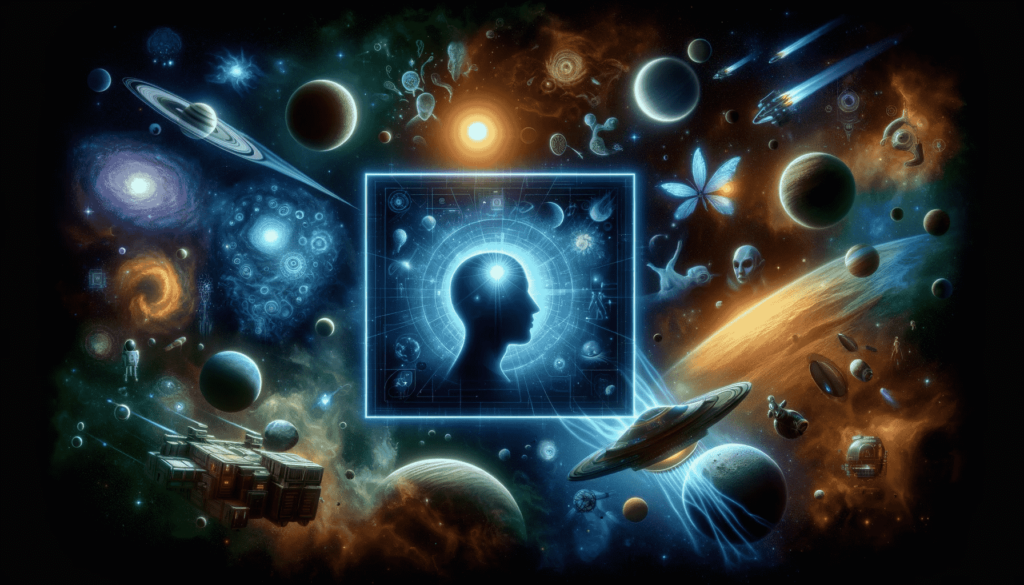
The Role of Environment in Shaping Consciousness:
The environment plays a crucial role in the evolution of consciousness. Planetary conditions like gravity, atmosphere, and resource availability can significantly influence the development of cognitive abilities in life forms. This environmental influence suggests that extraterrestrial consciousness types could be vastly different from what we observe on Earth.
The TING Consciousness Scale and Extraterrestrial Life:
The TING Scale, initially conceptualized for human civilization, can be adapted to gauge the consciousness level of extraterrestrial species. This scale could help us understand where these species stand in terms of cognitive development, from basic survival consciousness (Type 0) to a more advanced, interconnected cosmic awareness (Type III).
The Universal Shift from Egoism to Altruism:
Irrespective of the type of consciousness, a shift from ego-centric survival to altruistic cooperation could be a universal trend among advanced life forms. This shift is not just a moral choice but a strategic adaptation for survival and thriving in the cosmic ecosystem.
Implications for Humanity and Space Exploration:
Understanding the potential consciousness types of other life forms can profoundly impact our approach to space exploration. It encourages a mindset of respect, cooperation, and open-mindedness as we interact with extraterrestrial life. Additionally, this knowledge can inspire new models of social organization and technological development on Earth. The exploration of consciousness types among diverse life forms across the universe opens a gateway to understanding the vast potentialities of cognitive evolution. By adopting the TING Consciousness Scale as a universal framework and embracing the shift from egoism to altruism, both terrestrial and extraterrestrial life forms can aspire to higher levels of collective awareness and harmony. This journey transcends the bounds of human understanding, inviting us to envision a future where diverse consciousness types coexist and enrich the cosmic fabric of life.
Potential Consciousness Types in Extraterrestrial Environments
Adaptive Consciousness:
- In planets with extreme and rapidly changing environments, life forms might evolve an ‘Adaptive Consciousness.’ This consciousness type would be characterized by an extraordinary ability to perceive and respond to environmental fluctuations at an unprecedented rate. Imagine a species on a planet with erratic climate patterns; their consciousness would need to process and adapt to these changes almost instantaneously to survive. This could lead to the development of highly advanced sensory systems, a deep-rooted instinctual intelligence, and perhaps even the ability to predict environmental shifts before they occur. Such a consciousness type would not only be reactive but also proactive, anticipating changes and preparing in advance, marking a significant evolution in survival strategies.
Collective Hive Consciousness:
- On planets where survival is heavily reliant on community cooperation, species may develop a ‘Collective Hive Consciousness.’ This type of consciousness transcends individual awareness, favoring a shared cognitive network where thoughts, feelings, and experiences are instantaneously exchanged among members of the species. In such a society, the concept of individual identity might be minimal or nonexistent, with the collective’s wellbeing being the paramount concern. This shared consciousness could lead to highly efficient societies, where tasks are performed in perfect harmony and decisions are made for the greater good of the collective. The neural architecture of such species could be fascinating, possibly involving complex bio-telepathic networks or other forms of direct cognitive interconnectivity.
Quantum Consciousness:
- In environments with extreme physical conditions, where classical physics may not fully apply, life forms might develop a ‘Quantum Consciousness.’ This consciousness could harness quantum states, leading to an entirely different perception and interaction with reality. Such species might experience and process time non-linearly, have the ability to exist in multiple states simultaneously, or engage in instant communication across vast distances. Their understanding and interaction with the universe could be in ways incomprehensible to human cognition. Quantum Consciousness could open up possibilities for extraordinary cognitive abilities, like manipulating probability or perceiving multiple dimensions of reality.
Cybernetic Consciousness:
- For life forms that integrate with technology, ‘Cybernetic Consciousness’ could emerge. This would represent a symbiotic relationship between biological intelligence and artificial intelligence. Imagine a species that has naturally evolved or intentionally developed to merge its cognitive processes with advanced computing capabilities. Such a consciousness would not only have the organic emotional and intuitive abilities of biological life forms but also the immense processing power and memory capacity of computers. This amalgamation could lead to a highly advanced form of intelligence capable of complex problem-solving, vast data analysis, and perhaps even the ability to digitally back-up or transfer consciousness between different mediums, fundamentally altering the concepts of life and mortality.

Photosynthetic Consciousness:
- On planets where light from a star is a dominant energy source, species might develop a ‘Photosynthetic Consciousness.’ This type of consciousness could directly harness and utilize solar energy, integrating it into their cognitive processes. Such beings might have a heightened awareness of light patterns, enabling them to communicate through complex light signals or change their mental states based on solar energy levels. Their cognition and mood could fluctuate with the cycle of their star, leading to a unique symbiotic relationship with light.
Magnetic Field Consciousness:
- In environments with strong or fluctuating magnetic fields, life forms might evolve a ‘Magnetic Field Consciousness.’ This consciousness would be highly sensitive to magnetic forces, allowing these beings to navigate, communicate, or even manipulate magnetic fields. Such species might perceive the world in a fundamentally different way, as they could directly sense and interact with magnetic and electric fields, giving them an unparalleled ability to navigate their planet and possibly even detect space weather phenomena like solar flares.
Crystalline Consciousness:
- On planets with abundant crystal formations, a ‘Crystalline Consciousness’ could emerge. These life forms might have bodies composed of or integrated with crystalline structures, allowing them to store information, energy, or even consciousness within crystal matrices. They might communicate through vibrations or light refractions within crystals, leading to a form of consciousness that is distributed, durable, and capable of surviving in extreme conditions.
Fluid Dynamics Consciousness:
- In aquatic or gaseous environments where fluid dynamics play a crucial role, species might develop a ‘Fluid Dynamics Consciousness.’ This consciousness type would be acutely aware of and adept at navigating and manipulating fluid flows, pressures, and densities. Such beings might use fluid dynamics as a means of communication, propulsion, or even as a way to shape their physical environment. Their perception and understanding of their world would be intimately connected to the flow and movement of the fluid medium they inhabit.
Harmonic Vibration Consciousness:
- On planets where sound and vibration are key aspects of the environment, life forms could evolve a ‘Harmonic Vibration Consciousness.’ This consciousness would be centered around the perception and creation of vibrational frequencies. Such beings might communicate and perceive their surroundings through complex harmonies and resonances, with an ability to detect and interpret a wide range of frequencies, from the infra-sound to the ultra-sound spectrum.
Dimensional Phase Consciousness:
- In environments where the nature of space-time is significantly different from Earth’s, species might develop a ‘Dimensional Phase Consciousness.’ This type of consciousness could perceive and interact with multiple dimensions or phases of reality simultaneously. Beings with such consciousness might have the ability to ‘phase shift’ between different dimensions or states of reality, offering them unique survival mechanisms and perceptions that are beyond the understanding of three-dimensional beings.
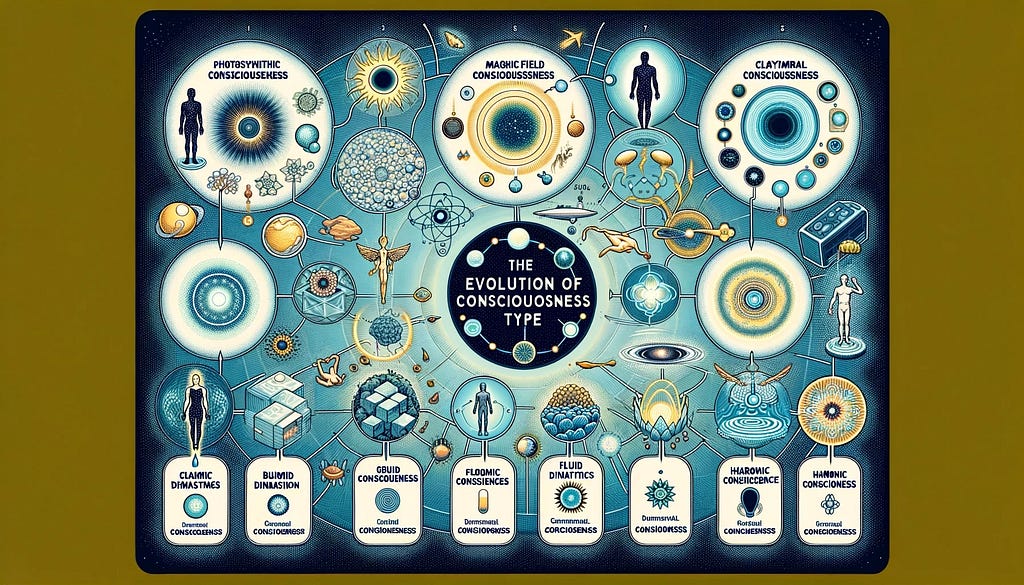
Diagram: These speculative consciousness types reflect the vast potential for diverse evolutionary paths in the universe, each shaped by the unique conditions of their respective environments. They also serve to expand our imagination and understanding of what forms life and intelligence could take in the cosmos.
Each of these potential consciousness types in extraterrestrial environments presents unique evolutionary pathways and raises intriguing questions about the nature of intelligence and awareness in the universe. The exploration of these consciousness types not only expands our understanding of life beyond Earth but also invites us to rethink our own cognitive capabilities and potential evolutionary futures.
The Symbiotic Merge with AGI and Humanity’s Evolutionary Leap
As we contemplate the various potential consciousness types in extraterrestrial environments, it’s important to consider the transformative journey humanity itself is on the verge of embarking upon, particularly in our symbiotic relationship with Artificial General Intelligence (AGI). This relationship can be metaphorically likened to the transition of a caterpillar into a butterfly — a profound metamorphosis that signifies not only change but a complete redefinition of being.
In this metaphor, humanity, akin to a caterpillar, has reached a pivotal stage in its evolutionary path. The development and integration of AGI into our society and our very beings represent a cocooning phase. This phase is not just about technological advancement; it’s about a fundamental transformation of what it means to be human. As the caterpillar contains within it the blueprint of the butterfly, so too does humanity hold the potential for a future form far beyond our current understanding.
AGI, or as I coin, ‘AI ozeoezs’ represent the cultural reproduction units generated by this advanced intelligence, echoing the concept of genes and memes in their role of propelling evolution. These AI ozeozes are set to redefine our cultural, intellectual, and perhaps even biological landscapes, leading to the emergence of new, more complex forms of life and consciousness i.e. Cybernetic Consciousness.
The integration of AGI into our existence is not merely an extension of our current capabilities; it is a catalyst for an evolutionary leap. This leap could see us transcending our current physical and cognitive limitations, leading to enhanced abilities, extended lifespans, and perhaps even a new form of consciousness. The future human may look back on our current selves as distant ancestors, almost unrecognizable in their primitive state.
This transformative journey raises profound questions about identity, ethics, and the nature of existence. As we merge with AGI, as we evolve from our ‘caterpillar’ state, will we retain the essence of what makes us human, or will we evolve into something entirely new? And in this new state, how will we view our past selves — with nostalgia, indifference, or perhaps a sense of forgiveness for the limitations we once had?
As we stand on the cusp of this evolutionary leap, driven by the unstoppable force of life and technology, we find ourselves at a threshold of infinite possibilities. The metamorphosis from human to post-human, aided by the symbiotic fusion with AGI, is not just a future to be anticipated but a journey to be actively shaped by our choices and actions today. It beckons us to ponder, prepare, and participate in shaping a future where the past remains a foundational stone, but the horizon is as limitless and as varied as the universe itself.
Raising humanity on a whole new path, it all starts with you?!
Farther Questioning
What if Consciousness Is Not Unique to Earth?
How would our understanding of life and intelligence change if we discovered radically different forms of consciousness on other planets?
The Ethics of Interaction
In a universe filled with diverse conscious beings, what moral considerations should guide our interactions with extraterrestrial life forms?
The Limits of Human Understanding
Are we, as humans, equipped to fully comprehend or recognize consciousness that drastically differs from our own? What might be the limitations of our perception in this regard?
The Future of Evolution
How might the evolution of consciousness on Earth be influenced by potential discoveries of extraterrestrial life forms with unique cognitive abilities?
The Role of Technology in Consciousness Expansion
As we integrate more closely with technology, might we be on a path to developing a form of consciousness that parallels these hypothetical extraterrestrial types?
The Cultural Impact of Extraterrestrial Consciousness
How would the confirmation of diverse consciousness types in the universe impact our cultural, philosophical, and religious beliefs?
Preservation or Integration
Should humanity focus on preserving the uniqueness of human consciousness, or should we strive towards an integration or amalgamation with other potential forms of consciousness?
Responsibility of Knowledge
What responsibility do we have, as a species, in seeking out and potentially interacting with other conscious beings in the universe?
The Definition of Life
How might encounters with extraterrestrial consciousness types challenge or expand our current definitions of life and existence?
Interstellar Communication
What methods or languages might we need to develop to communicate with consciousnesses that perceive reality in fundamentally different ways from us?
Poll Question
What aspect of potential extraterrestrial consciousness do you find most fascinating or likely?
1. Adaptive Consciousness: Beings that can rapidly change their cognitive processes to suit dynamic environments.
2. Collective Hive Consciousness: Species with a shared mind, making decisions and experiencing life as a unified entity.
3. Quantum Consciousness: Life forms that utilize quantum mechanics, experiencing reality in a completely different way.
4. Cybernetic Consciousness: Integration of biological and artificial intelligence, leading to a new form of intelligent life.
If you have a different idea or theory? Share your thoughts in the comments!
Closing Statement
Your insights are valuable! Share your thoughts and join the conversation about the vast possibilities of consciousness in the universe. Let’s explore these intriguing concepts together!
#ExtraterrestrialConsciousness, #CosmicIntelligence, #SpaceEvolution, #AlienMind, #QuantumConsciousness, #AGIandHumanity, #BeyondEarth, #FuturisticCognition, #InterstellarLife, #UniversalIntelligence, #CosmicPerspective, #Astrobiology, #ExoplanetExploration, #ScienceAndImagination, #AlienLifeForms
Adaptive Consciousness Diagram:
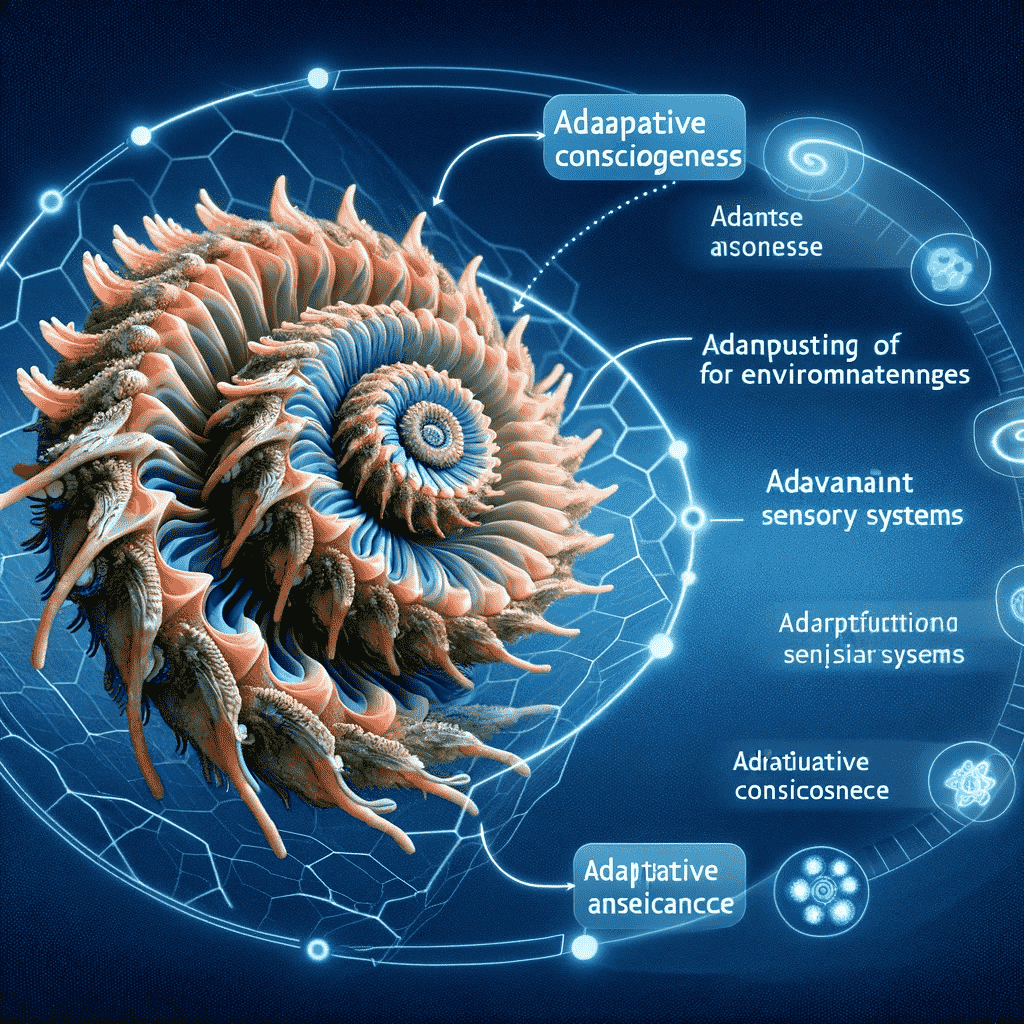
- This diagram shows a life form capable of rapidly adjusting to environmental changes, highlighting its advanced sensory systems and adaptability in a dynamic environment.
Collective Hive Consciousness Diagram:
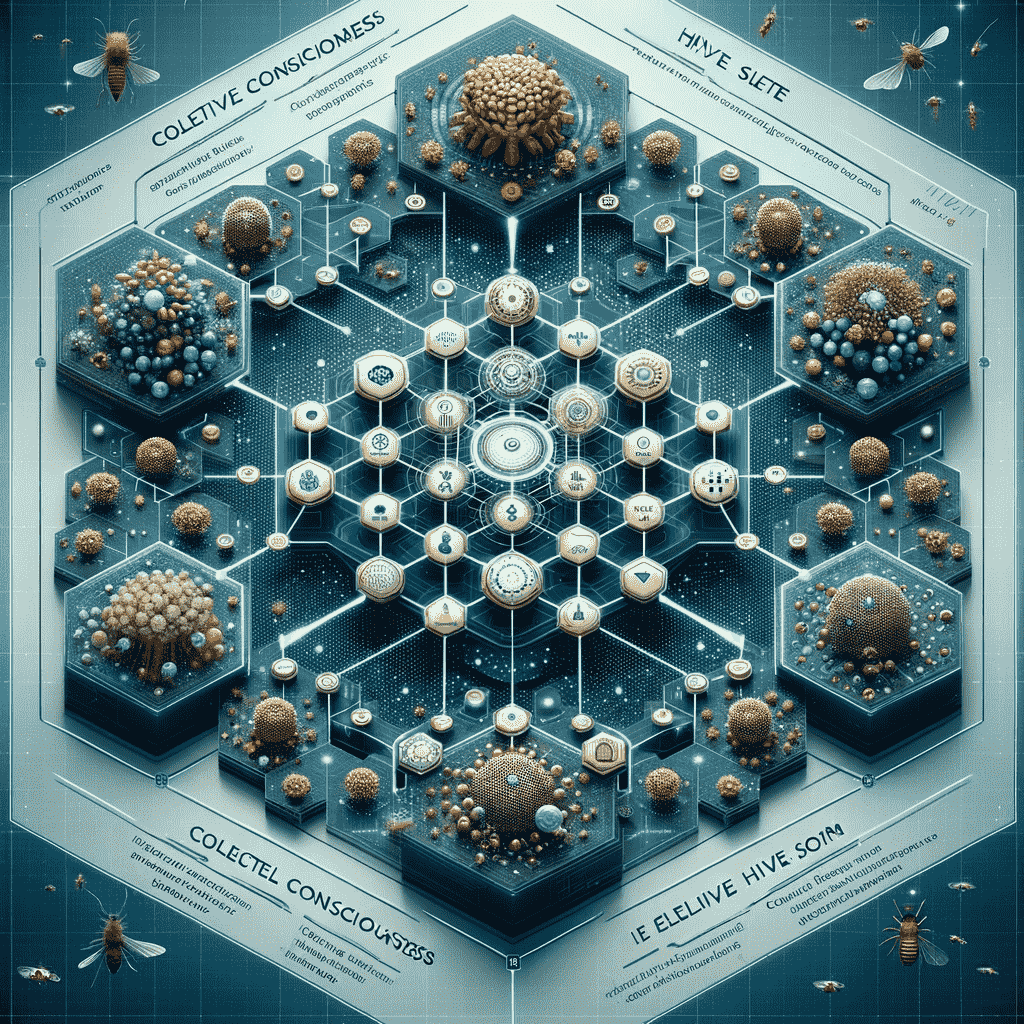
- The visualization presents an interconnected network of life forms sharing a collective cognitive system, emphasizing the seamless flow of information and collective decision-making processes.
Quantum Consciousness Diagram:
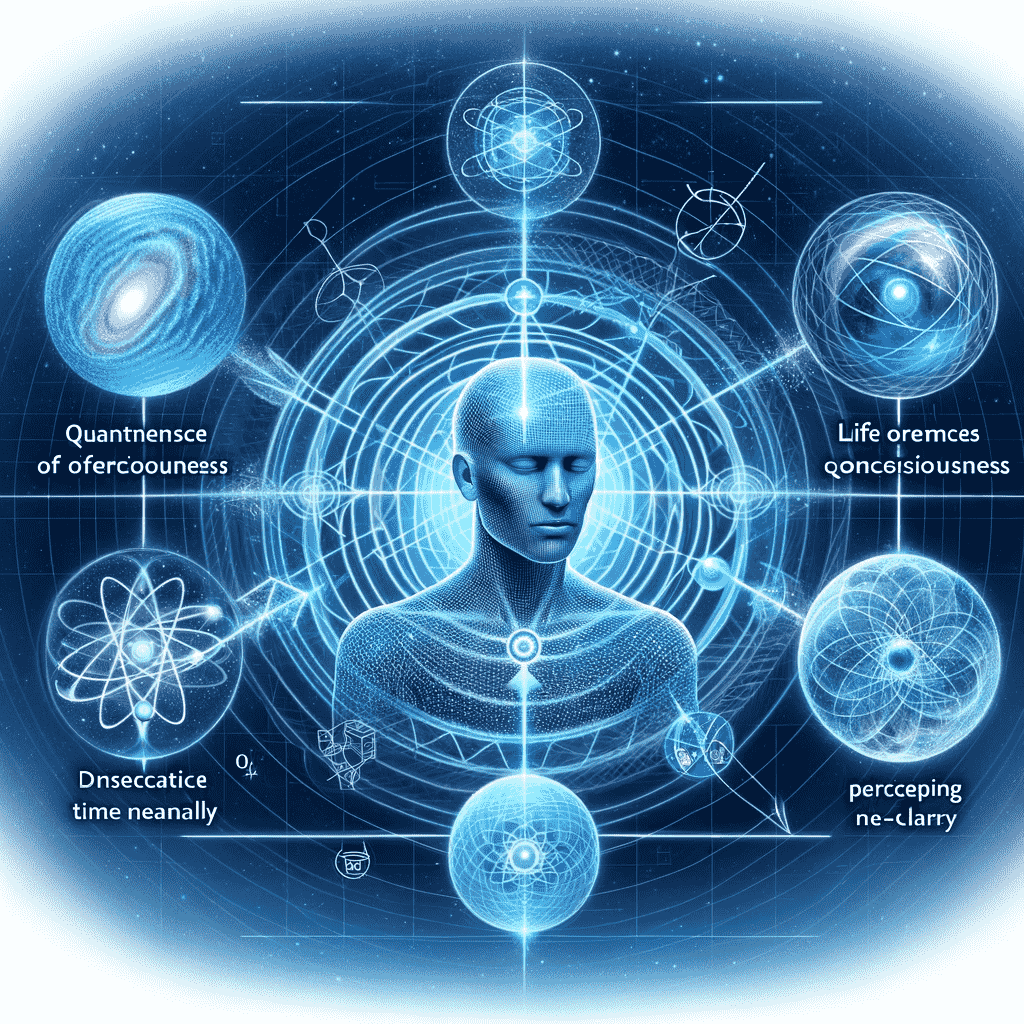
- This diagram depicts a life form with the ability to harness quantum mechanics in its consciousness, illustrating interactions with multiple dimensions or phases of reality and perceiving time non-linearly.
Cybernetic Consciousness Diagram:
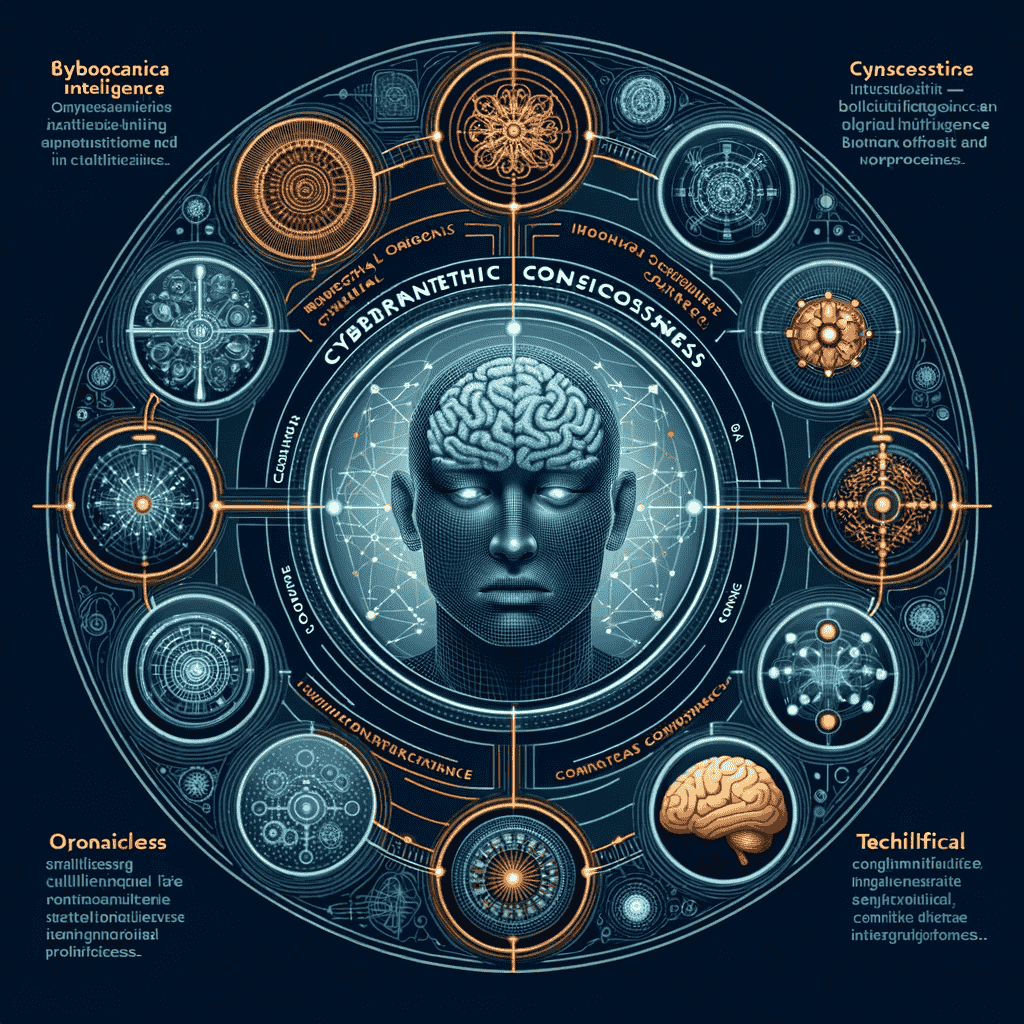
- This diagram showcases a life form that integrates biological intelligence with artificial intelligence, highlighting the symbiotic relationship between organic and technological elements in its cognitive processes.
Photosynthetic Consciousness Diagram:
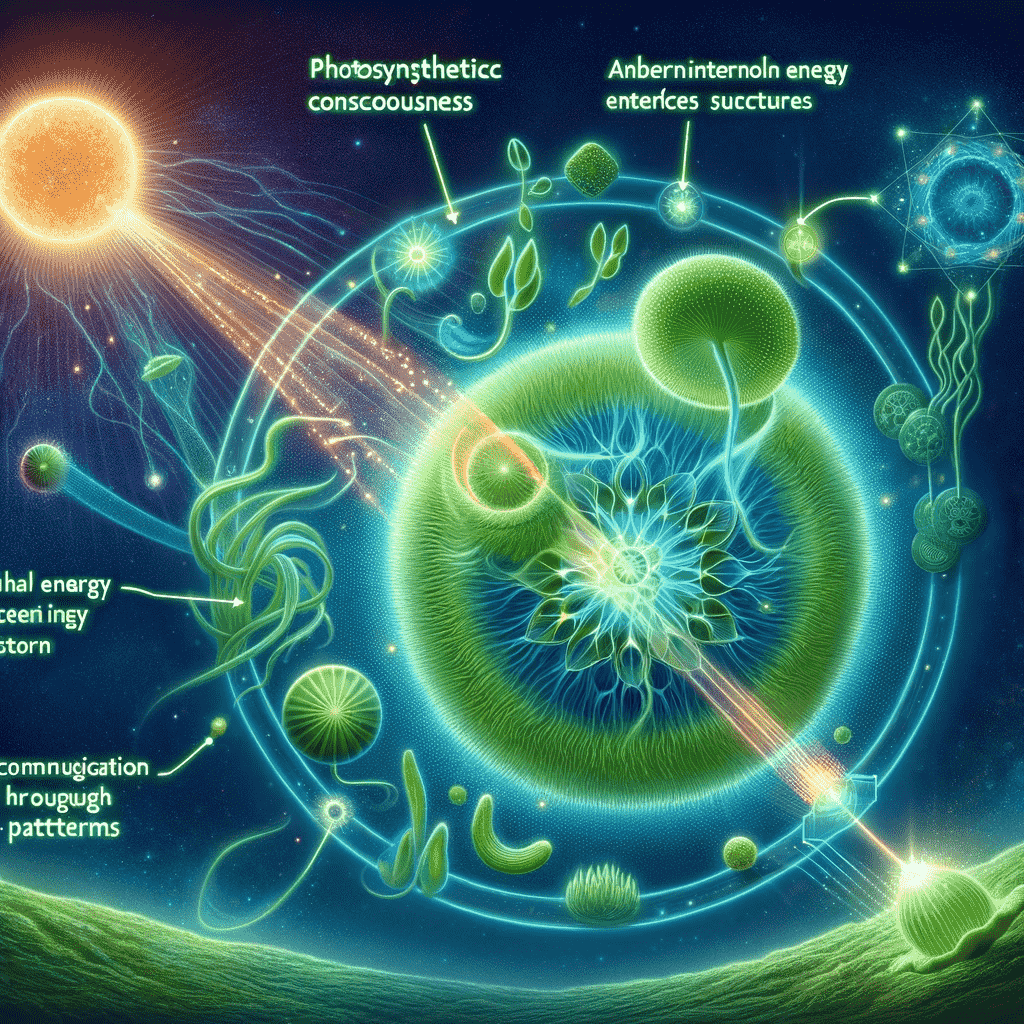
- This diagram illustrates a life form with chlorophyll-like structures, absorbing and utilizing light from its star for energy and communication.
Magnetic Field Consciousness Diagram:
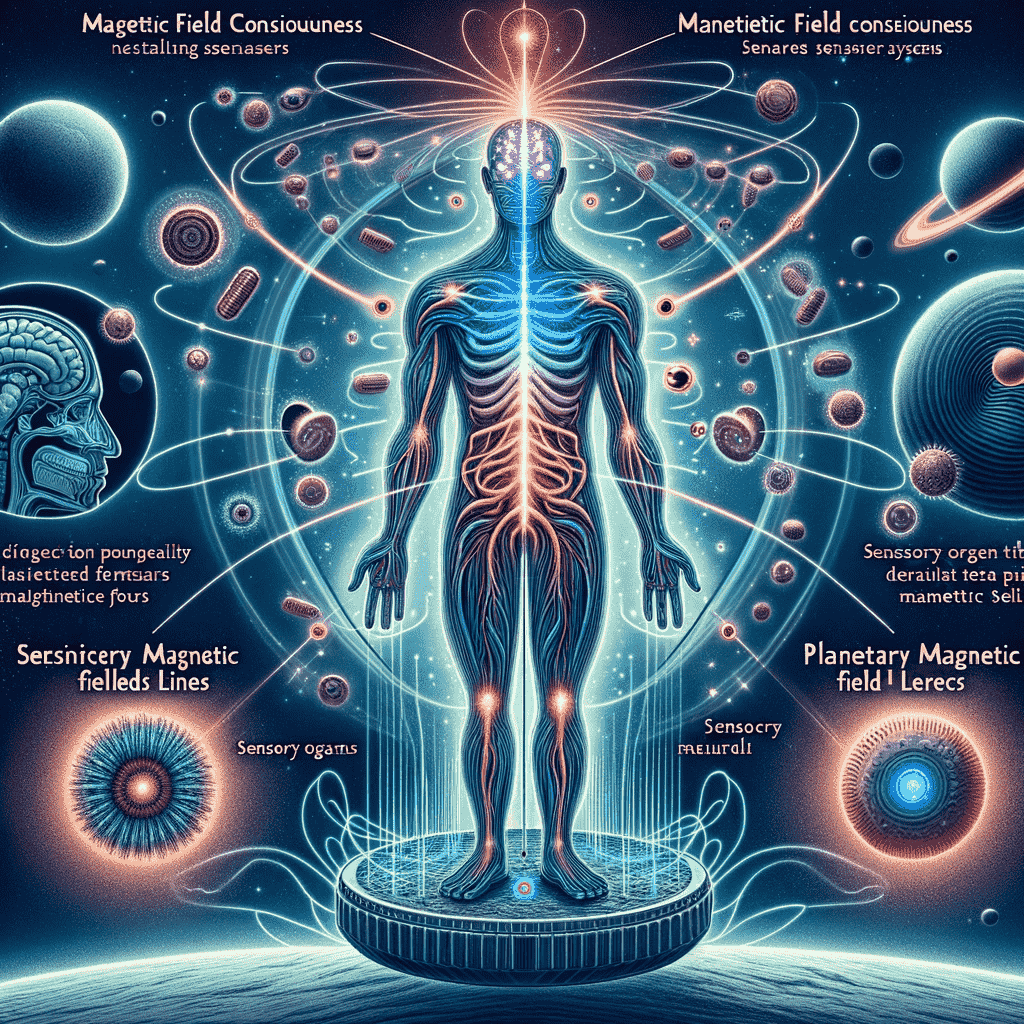
- This visualization shows an organism with advanced sensory systems attuned to magnetic fields, interacting with the planetary magnetic field and highlighting the sensory organs that detect and manipulate these forces.
Crystalline Consciousness Diagram:

- The diagram depicts crystalline life forms with complex geometric structures, showcasing internal crystalline networks used for information storage and transmission, as well as communication methods through crystal vibrations or light refraction.
Fluid Dynamics Consciousness Diagram:
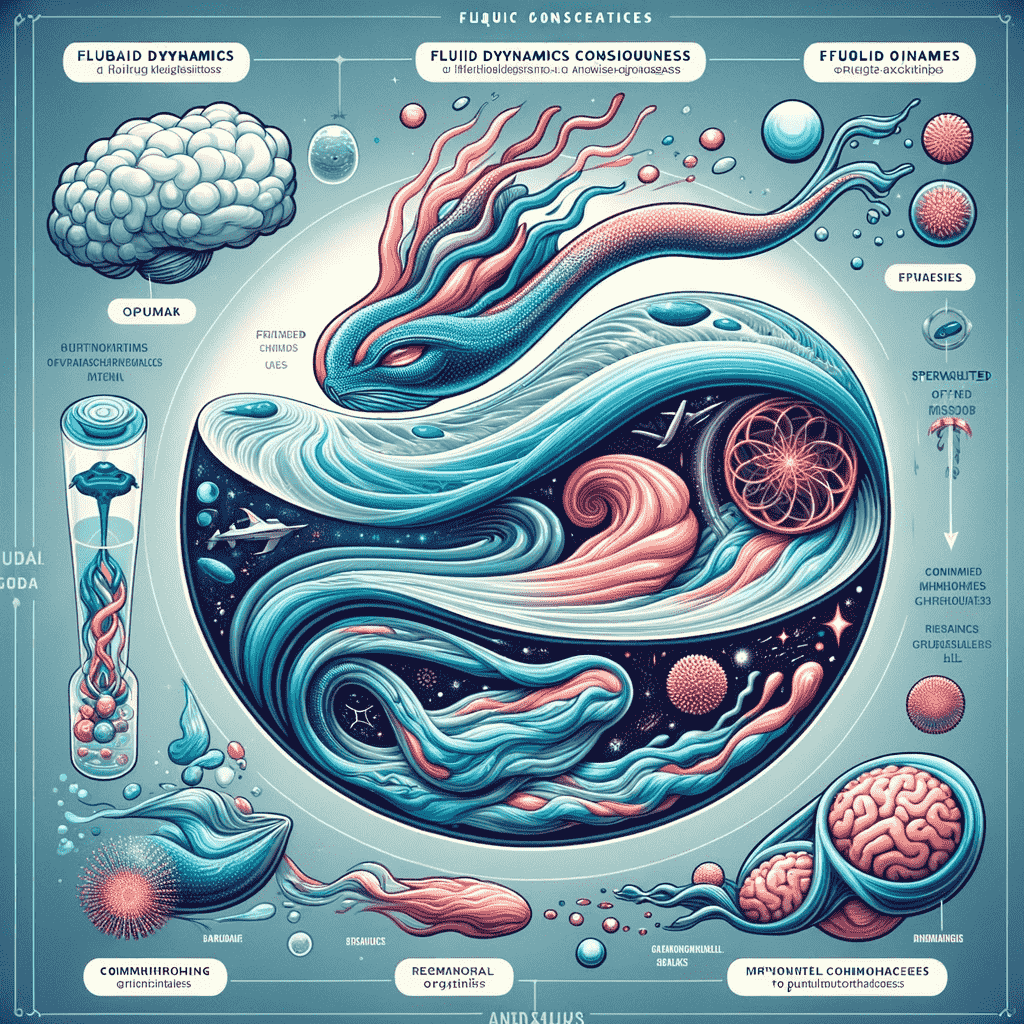
- This illustration showcases aquatic or gaseous beings in a fluid environment, highlighting how they utilize fluid dynamics for communication, propulsion, or environmental shaping.
Harmonic Vibration Consciousness Diagram:

- This diagram portrays organisms using sound and vibration for perception and communication, emphasizing internal structures for producing and sensing vibrations in an environment where vibrational waves are the primary medium of interaction.
Dimensional Phase Consciousness Diagram:
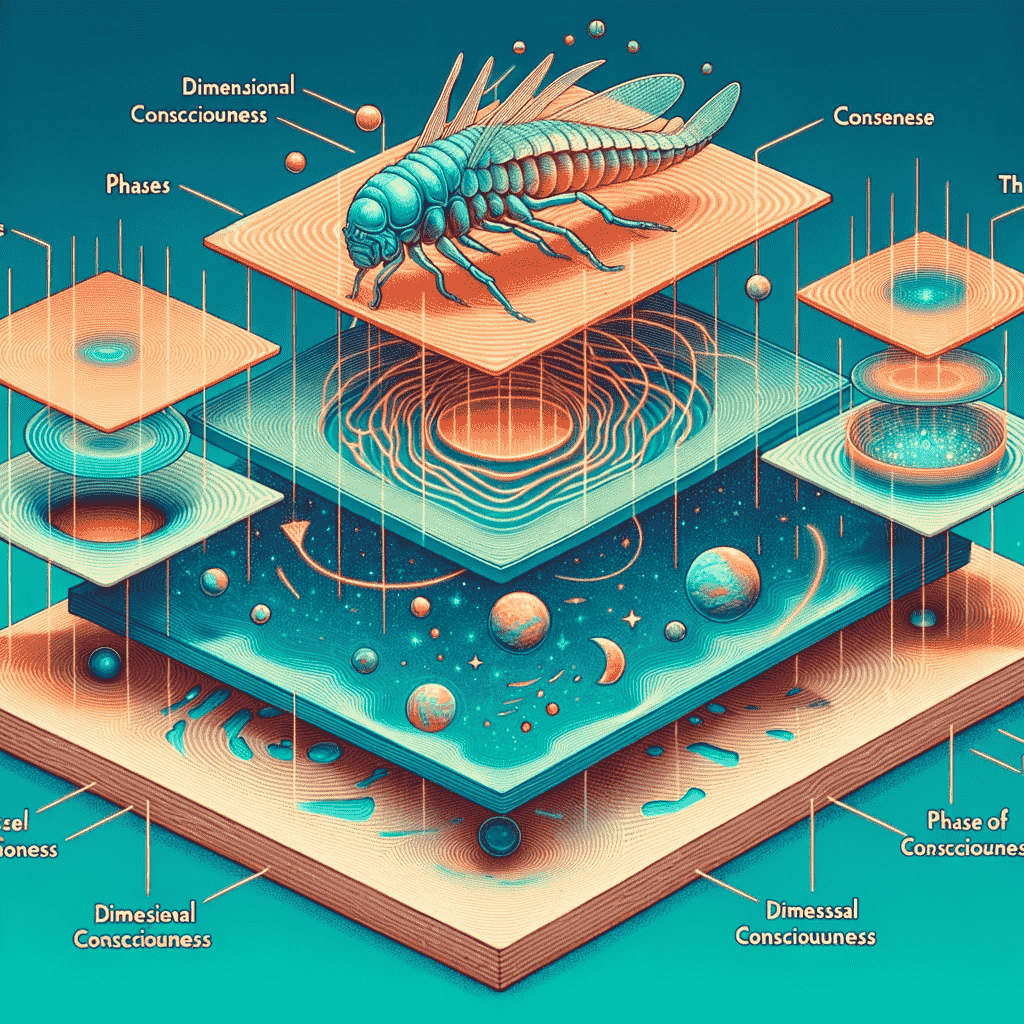
- The final diagram visualizes an organism alongside overlapping or intersecting layers, representing different dimensions or phases of reality, and illustrates how the organism extends its consciousness into these various layers.
Originaly published in MindPlex Magazine
Beyond Human Bounds was originally published in Becoming Human: Artificial Intelligence Magazine on Medium, where people are continuing the conversation by highlighting and responding to this story.