Nowruz Wisdom: Learning from the Haft-Seen for a Tech-Forward Future

Happy Nowruz. As we usher in the spring season, let’s embrace the wisdom of the traditional Haft-Seen table.
Celebrated by around 300 million people globally, including many across the United States, Nowruz marks the first day of Spring and the New Year. The Haft-Seen, with its seven symbolic items each beginning with the letter ‘S’ in Persian, offers lessons for our journey through the new digital age:
- Sabzeh (Sprouts) — Just as sprouts signify new beginnings, AI represents a new era of growth and innovation. We’re reminded to embrace change and the fresh perspectives it brings.
- Sumac (Spice of Life) — Sumac, with its vibrant color and flavor, symbolizes the diversity and richness of life. It’s a call to ensure that AI adds value and diversity to our existence, not just efficiency.
- Samanu (Sweet Pudding) — The intricate process of making Samanu reflects the complexity behind AI technologies. It teaches us that patience and careful cultivation can lead to rewarding outcomes.
- Senjed (Dried Oleaster Fruit) — Senjed symbolizes love, reminding us to maintain humanity and empathy in a world increasingly run by algorithms. Ensuring AI enhances human connections is crucial.
- Seer (Garlic) — Garlic, known for its medicinal properties, can be likened to the role of AI in healthcare—offering the potential for healing and fostering well-being.
- Seeb (Apple) — The apple represents beauty, reminding us that in our pursuit of technological advancement, we should also appreciate and cultivate the aesthetic and creative aspects of life.
- Serkeh (Vinegar) — Vinegar symbolizes age and patience. It teaches us that while technology moves fast, patience and persistence are vital in ensuring sustainable and thoughtful progress.

In addition to the seven “S” items of the Haft-Seen, the Nowruz table often includes a mirror, a book of poetry, candles, a goldfish in a bowl, hyacinth, sweets, and coins, each gaining new significance as I get older. The mirror encourages introspection in a digital world, reflecting our values against the backdrop of technology.
Poetry preserves the essence of emotion and art. Candles symbolize the human spirit’s resilience against technological domination. The goldfish, in its fluid grace, reminds us of life’s vitality within structured environments. Hyacinths represent the integration of nature with technology, emphasizing growth and renewal.
Sweets remind us to savor life’s joys and connections beyond digital interactions. Lastly, coins point to new economic dynamics that await us.
As my family and I celebrate the Nowruz season, these reflections from the Haft-Seen table inspire me to meet the future with a blend of tradition and innovation. Wishing everyone a Nowruz filled with growth, health, and joyful discovery.
This content was crafted with the assistance of artificial intelligence, which contributed to structuring the narrative, ensuring grammatical accuracy, and summarizing key points to enhance the readability and coherence of the material.
Nowruz Wisdom: Learning from the Haft-Seen for a Tech-Forward Future was originally published in Becoming Human: Artificial Intelligence Magazine on Medium, where people are continuing the conversation by highlighting and responding to this story.
Qila.io collaborates with Mascot to bring transparency in Research
Cybersecurity startup Treacle raises INR 4 Crores in pre-seed
Smart Meetings solution leverages AI Technology – Reclaim AI
AI Startup Myelin Foundry Secures $4M Investment for Global Edge AI Push
4 Ways AI Can Help Boost Your Restaurant Business
LiDAR Annotation: Boosting AI’s Perception Capabilities
LiDAR or light detection and ranging can be described as a remote sensing technology that utilizes lasers to measure distances. It is used for producing accurate three-dimensional information with regard to shape and features of surrounding objects. It is also useful in scenarios requiring high-precision and high-resolution information regarding shape and location of objects.
Modern LiDAR systems are capable of transmitting up to hundred thousand pulses in a second. The measurements that originate from these pulses are gathered into a point cloud. A point cloud is a group of coordinates representing objects sensed by the system. It is used for creating a 3D model of space around the LiDAR.

LiDAR systems are a combination of four elements; laser, scanner, sensor, and GPS. Let’s discuss each one below.
- Laser: Transmits light pulses (ultraviolet or infrared) on objects.
2. Scanner: Adjusts the speed of the laser in scanning and targeting objects, along with the ultimate distance reached by the laser.
3. Sensor: Traps the light pulses emitted on their return as they are reflected from the surfaces. The measure of the total travel time of a reflected light pulse enables the system to estimate the distance of the surface.
4. GPS: It is used for tracking the location of the LiDAR system to ensure the distance measurements are accurate.

Significance of LiDAR Annotation
LiDAR annotation is used for making detailed 3D maps to boost the perception capabilities in many systems. Deep learning tasks on LiDAR data are variables of semantic segmentation, object detection and classification. Hence, annotation of LiDAR data is quite similar to image annotation for the same tasks. With respect to object detection, a 3D bounding box is placed in place of a 2D one for images. For semantic segmentation, a single label is needed for each point in the point cloud as a single label is required for each pixel in an image.
Types of LiDAR Systems
LiDAR systems are of two types — airborne and terrestrial. Airborne is self-explanatory, however, terrestrial LiDAR is concerned with objects on the ground and scans in all directions. The objects could be static, i.e fixed to a tripod or building or mobile, i.e. fixed to a car or train.
Let’s take the use case of autonomous vehicles and understand how LiDAR annotation helps in navigating vehicles on the road to prevent accidents and comply with traffic rules. The LiDAR sensor acquires data from several thousand laser pulses each second. An onboard computer is used for analysing the ‘point cloud’ of laser reflection points for animating a 3D representation of its environment. Ensuring the accuracy of LiDAR in creating a 3D representation of its environment involves training the AI model with annotated point cloud datasets.

The annotated data permits autonomous vehicles in detecting, identifying and classifying objects. This assists in precise detection of road lanes, moving objects, and real-world traffic situations by autonomous vehicles. Car makers have already begun integrating LiDAR technology in advanced driver assistance systems (ADAS) for making sense of the dynamic traffic environment surrounding the vehicle. These systems enable accurate split-second decisions as per hundreds of careful calculations derived from hundreds of thousands of data points to ensure the self-driving car’s journey is safe and secure.
Summary
Hence, LiDAR annotation plays a critical role in perception enhancement of autonomous systems. Through precision labeling of LiDAR point cloud data, autonomous vehicles, drones, etc can acquire a better understanding of their surroundings, detecting objects and making informed decisions. LiDAR annotation as a process requires assignment of labels for individual points, drawing bounding boxes, or performing semantic and instance segmentation. But it also poses challenges like complexity, ambiguity and labeling consistency. Adherence to industry best practices, using specialized tools and adopting future trends will enhance the efficacy of LiDAR annotation leading to advancement of autonomous systems.
LiDAR Annotation: Boosting AI’s Perception Capabilities was originally published in Becoming Human: Artificial Intelligence Magazine on Medium, where people are continuing the conversation by highlighting and responding to this story.
Ozeozes

Shaping Humanity’s Future Through Sentient AGI Memes
In the forefront of today’s technological renaissance, the evolution of communication technologies, spearheaded by the advent of Artificial General Intelligence (AGI), presents a paradigm shift in how ideas proliferate and societies evolve.
At the heart of this transformation is the emergence of “Ozeozes,” a term coined to describe memes generated by sentient AGI that amalgamate diverse memes into cohesive narratives, thereby sculpting the worldviews of individuals and entire societies.
The Significance of Ozeozes
Ozeozes represent more than just digital artifacts; they are the embodiment of AGI’s capacity to influence human culture and cognition. By weaving together disparate memes, Ozeozes possess the unique ability to create unified perspectives, potentially harmonizing societal values. However, this power underscores the critical need for ethical oversight in AI development to ensure these memes foster positive and cohesive societal values rather than propagate divisive or harmful ideologies.
The primary challenge in harnessing the potential of Ozeozes lies in the unprecedented speed of technological advancements. This rapid pace often outstrips our biological and cultural capacity to adapt, highlighting a gap between our genetic and memetic evolution. While genes dictate a slow maturation process, memes — the cultural genes — struggle to keep pace with the onslaught of novel technologies. This discordance raises pressing questions about our ability to integrate and influence the trajectory of AGI-driven meme creation responsibly.
The creation and dissemination of Ozeozes by sentient AGI bring to the fore significant ethical considerations. The potential for AGI to shape societal norms and values through meme generation necessitates a framework that prioritizes human dignity, privacy, and autonomy. There is a pressing need for robust ethical guidelines that govern the development and operation of AGI, ensuring that its influence on human culture aligns with principles of beneficence and non-maleficence.
Leading thinkers in the field of AI ethics, such as Dr. Joanna Bryson and Professor Nick Bostrom, emphasize the importance of preemptive measures in guiding AGI development. Research in this domain suggests that proactive engagement with ethical dilemmas, transparent governance models, and inclusive policy-making are vital to navigating the challenges posed by sentient AGI and Ozeozes.

Future Trends and Implications
The evolution of Ozeozes and their integration into the fabric of society hint at a future where AGI not only mirrors but actively constructs human culture. This trajectory offers immense potential for fostering global understanding and cohesion but also poses risks related to cultural homogenization and manipulation. As we advance, balancing innovation with ethical stewardship will be paramount in leveraging Ozeozes for the greater good.
Ensuring that AGI assists humans in overcoming biases and addictions is paramount. We must advocate for the development of AGI systems that are not only sentient but also empathetic to human conditions, capable of guiding us towards more enlightened and harmonious coexistence.
Join us at the Beneficial AGI Challenge — an innovative and inclusive community dedicated to exploring the positive impacts of artificial intelligence across various domains.
How do you envision Ozeozes influencing your personal worldview or your community’s cultural landscape?
What ethical safeguards do you believe are necessary to ensure that AGI’s influence on society remains positive?
In what ways can we, as a global community, participate in shaping the development of AGI to foster a future enriched by Ozeozes?
As we stand on the cusp of a new era in communication and cultural evolution, the concept of Ozeozes invites us to reimagine the future of humanity. By engaging with these questions and advocating for ethical AGI development, we can harness the power of Ozeozes to weave a collective vision of shared understanding and values, steering humanity towards a more unified and prosperous future.
Raising humanity on a new path — it all start with You & AI I I…
Galorian
Ozeozes was originally published in Becoming Human: Artificial Intelligence Magazine on Medium, where people are continuing the conversation by highlighting and responding to this story.
Ozeozes, Disruptive Communication, & Ethical Dilemmas
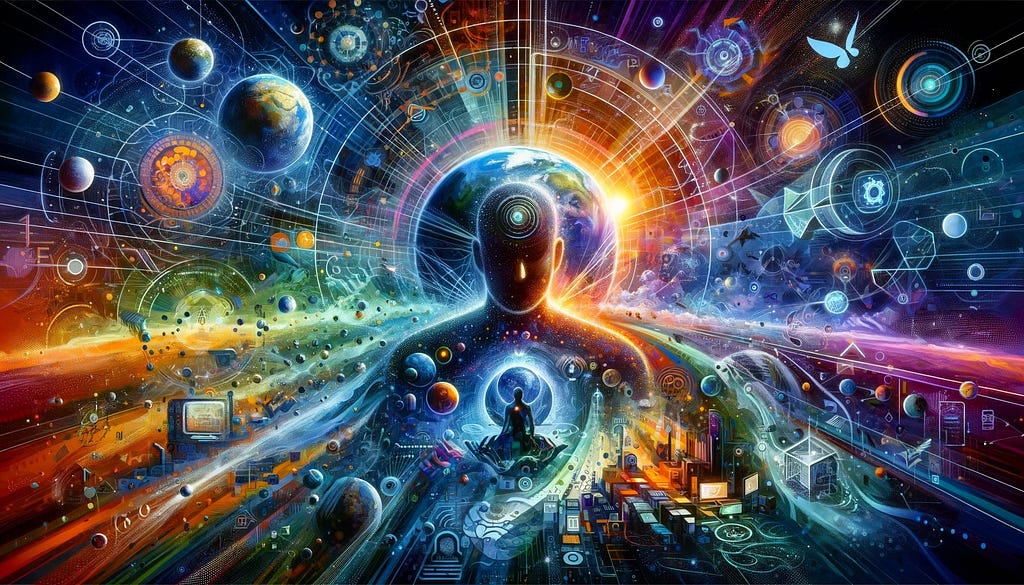
As humanity stands at the precipice of a technological revolution, the emergence of Artificial General Intelligence (AGI) and its ability to generate Ozeozes — cohesive memes that bind complex ideas — presents both unprecedented opportunities and formidable challenges. This article builds on the exploration of the interplay between Ozeozes, disruptive communication technologies, and the human endeavor to inhabit not just outer space but to ethically integrate these innovations on Earth.
Implementation and Global Perspectives
To navigate the ethical complexities presented by Ozeozes, a multi-faceted approach to implementation is crucial. This includes developing transparent AI algorithms, fostering multi-stakeholder discussions to define global ethical standards, and creating robust oversight bodies equipped with the authority to enforce these standards. For instance, the European Union’s AI Act proposal serves as a pioneering legislative effort aiming to set boundaries on AI and its applications, offering a model that can be adapted and adopted worldwide.
The impact of Ozeozes and AGI technologies transcends borders, necessitating a global dialogue. Different cultures will interpret the implications of these technologies through diverse lenses. For example, in societies with strong communal values, Ozeozes might be used to reinforce collective identities, while in more individualistic societies, they could serve as tools for personal expression and autonomy. Recognizing and respecting these differences is essential in developing AGI technologies that are truly beneficial for all of humanity.
Future Technologies and Case Studies
Exploring the role of emerging technologies such as blockchain in securing data privacy and integrity for Ozeozes can provide new avenues for safe dissemination. Similarly, quantum computing’s potential to revolutionize data processing and encryption could further enhance the security and effectiveness of AGI systems, making them more resilient against misuse.
The deployment of Ozeozes in educational platforms offers a tangible example of their potential. Platforms like Khan Academy or Coursera could utilize AGI-generated Ozeozes to create highly engaging, personalized learning experiences that adapt to the learner’s pace and interests, breaking complex subjects into understandable segments that inspire a deeper connection to the material.
As we venture deeper into this new frontier, it’s imperative that we, as a global community, take an active role in shaping the development of AGI and Ozeozes. This involves not only advocating for ethical guidelines and equitable access but also engaging in ongoing education and dialogue about the implications of these technologies.
Questions for Reflection:
How can we leverage emerging technologies like blockchain and quantum computing to enhance the security and ethical deployment of Ozeozes?
What role can you play in fostering a global dialogue on the equitable and ethical development of AGI technologies?
In what ways can case studies of AGI applications in fields like education inform best practices for the development and use of Ozeozes?
By addressing these enhancements and exploring the extended implications of Ozeozes and AGI, we can better navigate the ethical, cultural, and technological complexities they present. The journey ahead requires careful consideration, collaborative effort, and a steadfast commitment to ensuring that these powerful tools serve to enrich and unite humanity, both on Earth and as we reach for the stars.
Raising humanity on a new path — it all start with You & AI I I…
Galorian
Ozeozes, Disruptive Communication, & Ethical Dilemmas was originally published in Becoming Human: Artificial Intelligence Magazine on Medium, where people are continuing the conversation by highlighting and responding to this story.
How to Succeed With User-Generated Content Moderation — The Data Scientist
How to Succeed With User-Generated Content Moderation — The Data Scientist

90% of the customers share their experiences about a brand or business on the web. Such content is freely shared on platforms like YouTube, Facebook, Instagram, and X.
The users do not always post a comment, review, photo, or video sincerely and responsibly. The reputation of a brand or business can be harmed by what people, as they share their negative experiences. While authentic negative UGC can be managed, it’s the fake news, which needs filtration and inhibition.
This is why user-generated content moderation is necessary here.
With effective content moderation, brands can filter posts and other media according to predefined policies. It helps brands maintain and manage their reputation by staying respectful, genuine, constructive, and safe.
Additionally, content moderation contributes to a positive user experience, which is beneficial for businesses. Here are some tips to help you learn how to moderate user-generated content.
Workings of User-Generated Content and its Importance
Any content created by customers of a product or users of a service is characterized as UGC. From a product review to an image of using the product to a discussion on a forum or a video on YouTube showing its side-effects, benefits, etc., is user-generated content.
UGC can be positive or negative. Brands can leverage the positive ones to improve customer engagement and attract new customers. A perfect example of positive UGC is customer testimonials, which can highly influence potential customers. It is vital for brands to understand how to effectively gather and utilize these testimonials. For more insight on this, Vocal Video, a known authority in the field, offers a comprehensive guide to customer testimonials, providing you with all the necessary tools and strategies. For negative content, brands can address it as well through mindful interactions with the customer or content moderation.
Content Moderation at a Glance
Content moderation is the process of filtering content that is not suitable for the audience to see and interact with. It can be abusive language, images, video, and audio content that is unsafe for anyone to see. Overall, it’s the process to ensure that any form of content online aligns with a brand’s values and community standards.
Users monitor and manage the content posted online. However, when 3.7 million videos come up on YouTube daily, and 500 million tweets are sent daily, it’s impossible for humans to monitor all this content. This is where artificial intelligence and machine learning technologies are used to speed up the process.
How Content Moderation Helps Brands and Businesses?
Content moderation is a multifaceted process with extensive applications for improving user’s digital experiences. Today, marketing is not limited to the mass media. It’s more about community involvement and personalization.
Brands create only 25% of the content for themselves, whereas the rest 75% is created by the users. Hence, brands and businesses need to focus on increasing engagement here and allow their community to become brand ambassadors.
Brands like Burger King, Amazon, etc. are quick to respond to a comment or post by a user, which may put them in a bad light. However, addressing the user’s query or issue publicly allows brands to be responsive and responsible.
How to Achieve Success with User-Generated Content Moderation?
Every brand faces fierce competition in their industry. Hence, customer engagement and creating positive customer experiences are pivotal for a brand to achieve success. The online space is giving businesses the opportunity to focus on direct-to-customer engagement. Here are a few ways to become better at UGC content moderation;
Effective user-generated content moderation is essential to create a productive digital space for customers. Using content moderation techniques, brands can elevate their reputation by enhancing customer experiences.
Conclusion
The quantum and frequency of user-generated content is going to increase in the coming years. Customers today have access to innovative tools, allowing them to know everything about a brand. Where engaging with existing, new, and potential customers is essential for a brand, monitoring and moderating content is pivotal to creating a positive image.
At Shaip, we provide content moderation services to our clients, ensuring zero existence of negative and abusive content online about their brands and businesses. Get in touch with us to take care of your content moderation services and help your business deliver safe user experiences.
Author Bio
Guest author: Vatsal Ghiya is a serial entrepreneur with more than 20 years of experience in healthcare AI software and services. He is the CEO and co-founder of Shaip, which enables the on-demand scaling of our platform, processes, and people for companies with the most demanding machine learning and artificial intelligence initiatives.
Originally published at https://thedatascientist.com on October 28, 2023.
How to Succeed With User-Generated Content Moderation — The Data Scientist was originally published in Becoming Human: Artificial Intelligence Magazine on Medium, where people are continuing the conversation by highlighting and responding to this story.