Here are the Applications of NLP in Finance. You Need to Know
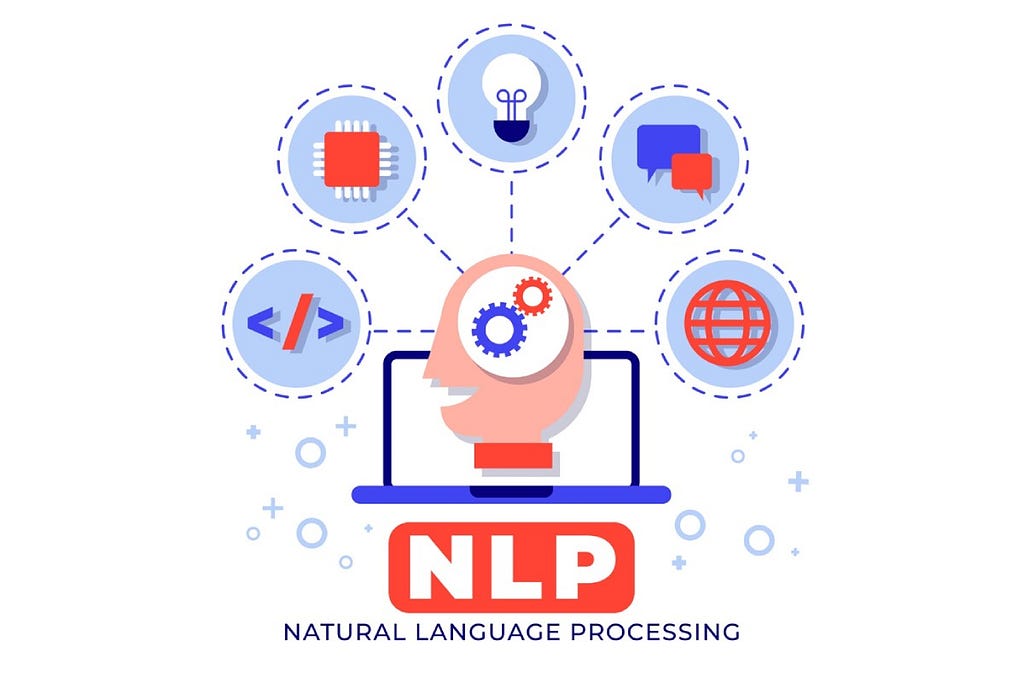
Artificial intelligence, machine learning, natural language processing, and other related technologies are paving the way for a smarter “everything.” The integration of advanced technologies with finance provides better accuracy and data consistency across different operations.
Where interpreting raw financial data has become easier NLP, it is also helping us make better predictions and financial decisions. NLP in finance includes semantic analysis, information extraction, and text analysis. As a result, we can automate manual processes, improve risk management, comply with regulations, and maintain data consistency. Going further, we will explore the benefits of natural language processing in finance and its use cases.
How Does Data Labeling Work in Finance?
Within NLP, data labeling allows machine learning models to isolate finance-related variables in different datasets. Using this training data, machine learning models can optimize data annotation, prediction, and analysis. Machine learning and artificial intelligence models need high-quality data to deliver the required results with higher accuracy and precision.
However, to help these models provide optimized results, NLP labeling is essential. Financial data labeling with NLP is exercised with the following techniques;
- Sentiment analysis helps understand the sentiment behind investment decisions made by customers and investors.
- Document categorization includes sorting documents into groups for better classification and organization. The categories can be customized according to the data and requirements.
- Optical character recognition is a classification and organization NLP technique for document classification and digitization.
Using these techniques, we can implement NLP for financial documents for effective data interpretation. Using this data, financial analysts and organizations can make informed decisions.
Use Cases of NLP Data Labeling in Finance
Labeled data is used to train machine learning models, creating a better scope for supervised learning. As we get better data usability with NLP labeling, the number of applications increases.
We generate tremendous amounts of financial data every day, and the vast majority of this data is unstructured. While analyzing this data is beneficial for the entire industry, doing so is a tedious task.
To get useful information from this data, NLP models are deployed to analyze text and extract useful information. Financial organizations need accurate information to make better decisions for compliance and regulatory evaluation. With NLP, they can also stay updated with the changes in regulations and compliance requirements.
Another application of NLP in finance is risk assessment, where organizations can determine the risk levels associated with a customer or entity based on their documentation and history. NLP can help declutter the information provided and extract information with NER and document categorization.
Within this, the organizations can also use NLP risk models to automatically rank a customer’s credit profile to deliver a comprehensive analysis.
Financial sentiment analysis is a bit different from regular sentiment analysis, even though both are performed with NLP. In the former, the analysis includes determining the market and customer reaction based on the stock price, market condition, a major event that can impact the markets, stocks, etc.
Financial companies can use the information obtained to make better investment decisions and align their services with market conditions and sentiment.
When banks and other financial institutions give out loans, they need to assess every profile for any sort of default risk or fraud. With NLP, organizations can fast-track this process as automated technologies help identify relevant information from a load of documents.
NLP can easily analyze credit history, loan transactions, and income history with the motive to find and flag unusual activity. For this, the NLP techniques used are anomaly detection, sentiment annotation, classification, sequence annotation, and entity annotation.
Financial organizations are also using NLP to make their accounts and auditing efficient. As NLP techniques can be used for documentation and text classification, this is beneficial for documenting reviews, checking procurement agreements, and other types of data.
Within this, the organizations can also detect fraudulent activities and find traces of money laundering. As we employ NLP for financial documents, the techniques used include NER, sentiment analysis, topic modeling, and keyword extraction.
Hidden between the vast amounts of data, NLP can find, identify, and extract relevant documents. As NLP technology and techniques use patterns to discover information, it is useful to process large amounts of unstructured data.
The NLP techniques for this finance task include NER and Optical Character Recognition (OCR).
The merger of ChatGPT and NLP in finance can provide better risk management and text-based financial analysis. Where GPT models are programmed with artificial intelligence and are meant to make our work productive and fast, ChatGPT can be deployed for in-depth text-based analysis.
In addition to analysis, it can be used for sentiment analysis, NER, and sentiment analysis. If that’s not all, we can also use ChatGPT to generate financial reports create summaries, and forecasts.

Conclusion
Natural language processing (NLP) has started an information extraction and analysis revolution in all industries. The versatility of this technology is also evolving to deliver better solutions and new applications. The usage of NLP in finance is not limited to the applications we have mentioned above. With time, we can use this technology and its techniques for even more complex tasks and operations.
As we expect the NLP technology to grow further and help with speech recognition, better data privacy, spam classification, etc. Shaip is at the forefront of understanding these applications and bringing them to your doorstep. We deliver intelligent NLP services aimed at delivering high-quality results to our clients. Better analysis and implementation will help you have a competitive advantage in the industry.
Author Bio
Vatsal Ghiya is a serial entrepreneur with more than 20 years of experience in healthcare AI software and services. He is the CEO and co-founder of Shaip, which enables the on-demand scaling of our platform, processes, and people for companies with the most demanding machine learning and artificial intelligence initiatives.Linkedin: https://www.linkedin.com/in/vatsal-ghiya-4191855/
Originally published at https://www.techiesguardian.com on October 13, 2023.
Here are the Applications of NLP in Finance. You Need to Know was originally published in Becoming Human: Artificial Intelligence Magazine on Medium, where people are continuing the conversation by highlighting and responding to this story.
5 Key Open-Source Datasets for Named Entity Recognition

Consider a news article about a recent SpaceX launch. The article is filled with vital information such as the name of the rocket Falcon 9, the launch site of Kennedy Space Center, the time of the launch Friday morning, and the mission goal to resupply the International Space Station.
As a human reader, you can easily identify these pieces of information and understand their significance in the context of the article.
Now, suppose we want to design a computer program to read this article and extract the same information. The program would need to recognize “Falcon 9” as the name of the rocket, “Kennedy Space Center” as the location, “Friday morning” as the time, and “International Space Station” as the mission goal.
That’s where Named Entity Recognition (NER) steps in.
In this article, we’ll talk about what named entity recognition is and why it holds such an integral position in the world of natural language processing.
But, more importantly, this post will guide you through five invaluable, open-source named entity recognition datasets that can enrich your understanding and application of NER in your projects.
Introduction about NER
Named entity recognition (NER) is a fundamental aspect of natural language processing (NLP). NLP is a branch of artificial intelligence (AI) that aims to teach machines how to understand, interpret, and generate human language.
The goal of NER is to automatically identify and categorize specific information from vast amounts of text. It’s crucial in various AI and machine learning (ML) applications.
In AI, entities refer to tangible and intangible elements like people, organizations, locations, and dates embedded in text data. These entities are integral in structuring and understanding the text’s overall context. NER enables machines to recognize these entities and paves the way for more advanced language understanding.
Named Entity Recognition (NER) is commonly used in:
- Information Extraction: NER helps extract structured information from unstructured data sources like websites, articles, and blogs.
- Text Summarization: It enables the extraction of key entities from a large text, assisting in creating a compact, informative summary.
- Information Retrieval Systems: NER refines search results based on named entities to enhance the relevance of search engine responses.
- Question Answering Applications: NER helps identify the entities in a question, providing precise answers.
- Chatbots and Virtual Assistants: They use NER to accurately understand and respond to specific user queries.
- Sentiment Analysis: NER can identify entities in the text to gauge sentiment towards specific products, individuals, or events.
- Content Recommendation Systems: NER can help better understand users’ interests and provide more personalized content recommendations.
- Machine Translation: It ensures proper translation of entity names from one language to another.
- Data Mining: NER is used to identify key entities in large datasets, extracting valuable insights.
- Document Classification: NER can help classify documents based on their class or category. This is especially useful for large-scale document management.
Training a model for NER requires a rich and diverse dataset. These datasets act as training data for machine learning models. It helps the model learn how to identify and categorize named entities accurately.
The choice of the dataset can significantly impact the performance of a NER model, making it a critical step in any NLP project.

5 Open-Source Named Entity Recognition Datasets
The table below presents a selection of named entity recognition datasets to recognize entities in English-language text.
Advantages and Disadvantages of Open-source Datasets
Open-source datasets are freely available for the community, significantly departing from the traditional, more guarded data-sharing approach. However, as with everything, open-source datasets come with their own set of advantages and disadvantages.
Advantages
1. Accessibility: The most obvious advantage of open-source datasets is their accessibility. These datasets are typically free; anyone, from researchers to hobbyists, can use them. This availability encourages a collaborative approach to problem-solving and fosters innovation.
2. The richness of Data: Open-source datasets often consist of a wealth of data collected from diverse sources. Such richness can enhance the quality and performance of models trained on these datasets. It allows the model to learn from varied instances.
3. Community Support: Open-source datasets usually come with robust community support. Users can ask questions, share insights, and provide feedback. It creates a dynamic and supportive learning environment.
4. Facilitate Research: Open-source datasets can be an invaluable resource for academic researchers, particularly those lacking the resources to collect their data. These datasets can help advance research and enable new discoveries.
Disadvantages
1.Data Quality: While open-source datasets can offer vast data, they don’t always guarantee quality. Some datasets may contain errors, missing values, or biases that can affect model performance.
2. Lack of Specificity: Many open-source datasets are generalized to serve a wide range of projects. As such, they might not be suitable for tasks requiring highly specific data.
3. Security and Privacy Concerns: Open-source datasets can sometimes raise issues regarding security and privacy, particularly when the data involve sensitive information. Even anonymized data can potentially be de-anonymized, posing significant risks.
4. Maintenance: Unlike proprietary datasets, open-source datasets may not always receive regular updates or maintenance. This inconsistency can lead to outdated or irrelevant data.
Despite the potential drawbacks, open-source datasets play an essential role in the data science landscape. We can understand the advantages and disadvantages of using them more effectively and efficiently for various tasks.
Conclusion
Named entity recognition is a vital technique that paves the way for advanced machine understanding of the text.
While open-source datasets have advantages and disadvantages, they are instrumental in training and fine-tuning NER models. A reasonable selection and application of these resources can significantly elevate the outcomes of NLP projects.
Originally published at https://wikicatch.com on September 22, 2023.
5 Key Open-Source Datasets for Named Entity Recognition was originally published in Becoming Human: Artificial Intelligence Magazine on Medium, where people are continuing the conversation by highlighting and responding to this story.
Automated Quality Inspection for Automotive — AI in Action
Automated Quality Inspection for Automotive — AI in Action
In the world of automobile manufacturing, quality is the cornerstone of a brand’s reputation and success. Ensuring the production of flawless vehicles is a meticulous task, and it often involves multiple forms of inspection along the assembly line. Visual inspections, aerodynamic optimization, and increasingly, sound analytics, all play critical roles in achieving excellence.
This blog post shines a spotlight on the captivating realm of sound analytics, a vital component of quality inspection, and the technological advancements byteLAKE, Intel® and Lenovo are going to showcase at the upcoming SC23 conference in Denver, Colorado.
Check out my other two posts in this three-part mini-series, where I provide summaries of byteLAKE’s plans for SC23 and the technologies we will be demonstrating there:
- AI is everywhere, but what more can it bring to Manufacturing and Automotive in specifics? Explore these AI solutions during the SC23 conference in Denver, Colorado. | by Marcin Rojek | Oct, 2023 | Medium
- Accelerating Time to Insights for Automotive — Live Demo and Presentation at SC23 in Denver, Colorado. | by Marcin Rojek | Nov, 2023 | Medium.
Sound Analytics: A Symphony of Quality Assurance
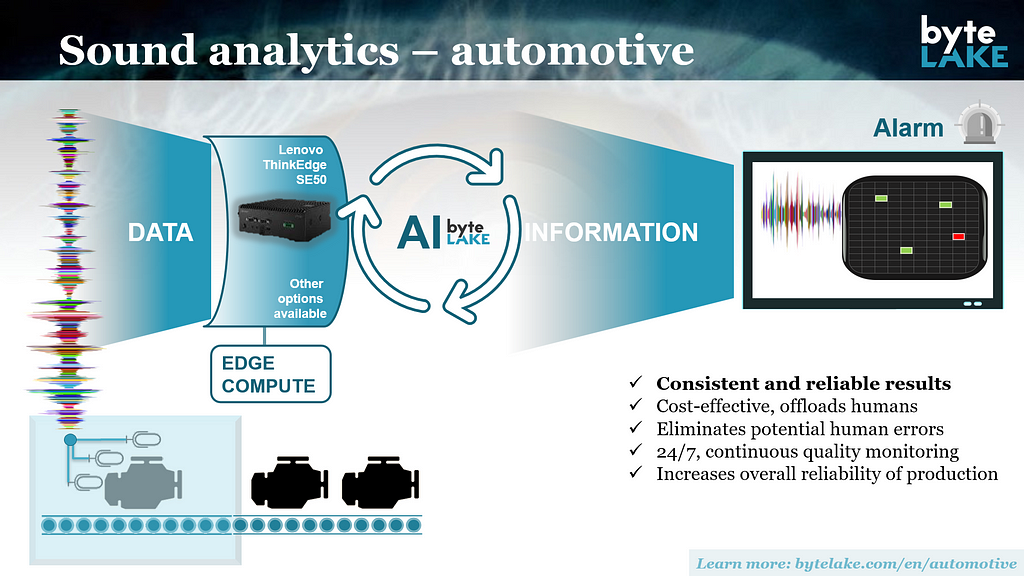
Imagine this: Microphones connected to highly-trained AI models, diligently record the symphony of sounds produced by car engines as they come to life. These AI systems are not just listening; they’re meticulously dissecting each note to detect irregularities, inconsistencies, or potential issues. In an era where excellence is non-negotiable, AI-driven sound analytics is taking the wheel.
But why the emphasis on sound analytics? Because it goes beyond mere quality control. By pinpointing issues during the assembly process, this technology doesn’t just bolster production efficiency; it also enhances the end-user experience. Fewer recalls, increased reliability, and a sterling reputation are just a few of the dividends paid by the integration of AI into the quality control process.
Humans and AI: The Power of Synergy
It’s essential to clarify that AI isn’t here to replace the human touch but to complement and empower it. In fact, AI serves as a force multiplier for human operators, exponentially increasing accuracy. For example, when humans monitor quality, they might achieve, say, 80% accuracy. When humans and AI join forces, that number skyrockets to 99%. Not to mention, AI never tires or gets bored, making it an invaluable asset for maintaining stringent quality control standards 24/7 in demanding, noisy environments.

The magic happens when humans leverage these tools to unleash their own creative potential. As AI takes on routine and repetitive tasks, humans are liberated to innovate and pioneer new approaches. The introduction of AI into the manufacturing landscape is akin to giving inventors a new set of tools and, ultimately, broadening the horizons of possibility.
The Edge of Manufacturing
In manufacturing, data processing must often occur close to the source and in real time. Enter Edge Computing, a technology that’s at the heart of contemporary manufacturing. It’s the engine that drives AI analytics, ensuring that issues are identified as they arise. While cloud solutions have their place for backup and extensive data storage, Edge AI is the real-time answer.

Optimizing the Future: Edge AI and Beyond
The Inference market, a pivotal component of AI, is set to grow exponentially, forecasted to be four times the size of the AI training market, with a long tail that extends far and wide.
Scalability is the name of the game, and we’re determined to put the future of manufacturing in the hands of innovation pioneers.
https://medium.com/media/d2099a2634560d71624e2a7fe6f1c622/href
Automated Quality Inspection for Automotive — AI in Action was originally published in Becoming Human: Artificial Intelligence Magazine on Medium, where people are continuing the conversation by highlighting and responding to this story.
How to collect voice data for machine learning
Machine learning and artificial intelligence have revolutionized our interactions with technology, mainly through speech recognition systems. At the core of these advancements lies voice data, a crucial component for training algorithms to understand and respond to human speech. The quality of this data significantly impacts the accuracy and efficiency of speech recognition models.
Various industries, including automotive and healthcare, increasingly prioritize deploying responsive and reliable voice-operated systems.
In this article, we’ll talk about the steps of voice data collection for machine learning. We’ll explore effective methods, address challenges, and highlight the essential role of high-quality data in enhancing speech recognition systems.
Understanding the Challenges of Voice Data Collection
Collecting speech data for machine learning faces three key challenges. They impact the development and effectiveness of machine learning models. These challenges include:
Varied Languages and Accents
Gathering voice data across numerous languages and accents is a complex task. Speech recognition systems depend on this diversity to accurately comprehend and respond to different dialects. This diversity requires collecting a broad spectrum of data, posing a logistical and technical challenge.
High Cost
Assembling a comprehensive voice dataset is expensive. It involves costs for recording, storage, and processing. The scale and diversity of data needed for effective machine learning further escalate these expenses.
Lengthy Timelines
Recording and validating high-quality speech data is a time-intensive process. Ensuring its accuracy for effective machine learning models requires extended timelines for data collection.
Data Quality and Reliability
Maintaining the integrity and excellence of voice data is key to developing precise machine-learning models. This challenge involves meticulous data processing and verification.
Technological Limitations
Current technology may limit the quality and scope of voice data collection. Overcoming these limitations is essential for developing advanced speech recognition systems.
Methods of Collecting Voice Data
You have various methods available to collect voice data for machine learning. Each one comes with unique advantages and challenges.
Prepackaged Voice Datasets
These are ready-made datasets available for purchase. They offer a quick solution for basic speech recognition models and are typically of higher quality than public datasets. However, they may not cover specific use cases and require significant pre-processing.
Public Voice Datasets
Often free and accessible, public voice datasets are useful for supporting innovation in speech recognition. However, they generally have lower quality and specificity than prepackaged datasets.
Crowdsourcing Voice Data Collection
This method involves collecting data through a wide network of contributors worldwide. It allows for customization and scalability in datasets. Crowdsourcing is cost-effective but may have equipment quality and background noise control limitations.
Customer Voice Data Collection
Gathering voice data directly from customers using products like smart home devices provides highly relevant and abundant data. This method raises ethical and privacy concerns. Thus, you might have to consider legal restrictions across certain regions.
In-House Voice Data Collection
Suitable for confidential projects, this method offers control over the data collection, including device choice and background noise management. It tends to be costly and less diverse, and the real-time collection can delay project timelines.
You may choose any method based on the project’s scope, privacy needs, and budget constraints.
Exploring Innovative Use Cases and Sources for Voice Data
Voice data is essential across various innovative applications.
- Conversational Agents: These agents, used in customer service and sales, rely on voice data to understand and respond to customer queries. Training them involves analyzing numerous voice interactions.
- Call Center Training: Voice data is crucial for training call center staff. It helps with accent correction and improves communication skills which enhance customer interaction quality.
- AI Content Creation: In content creation, voice data enables AI to produce engaging audio content. It includes podcasts and automated video narration.
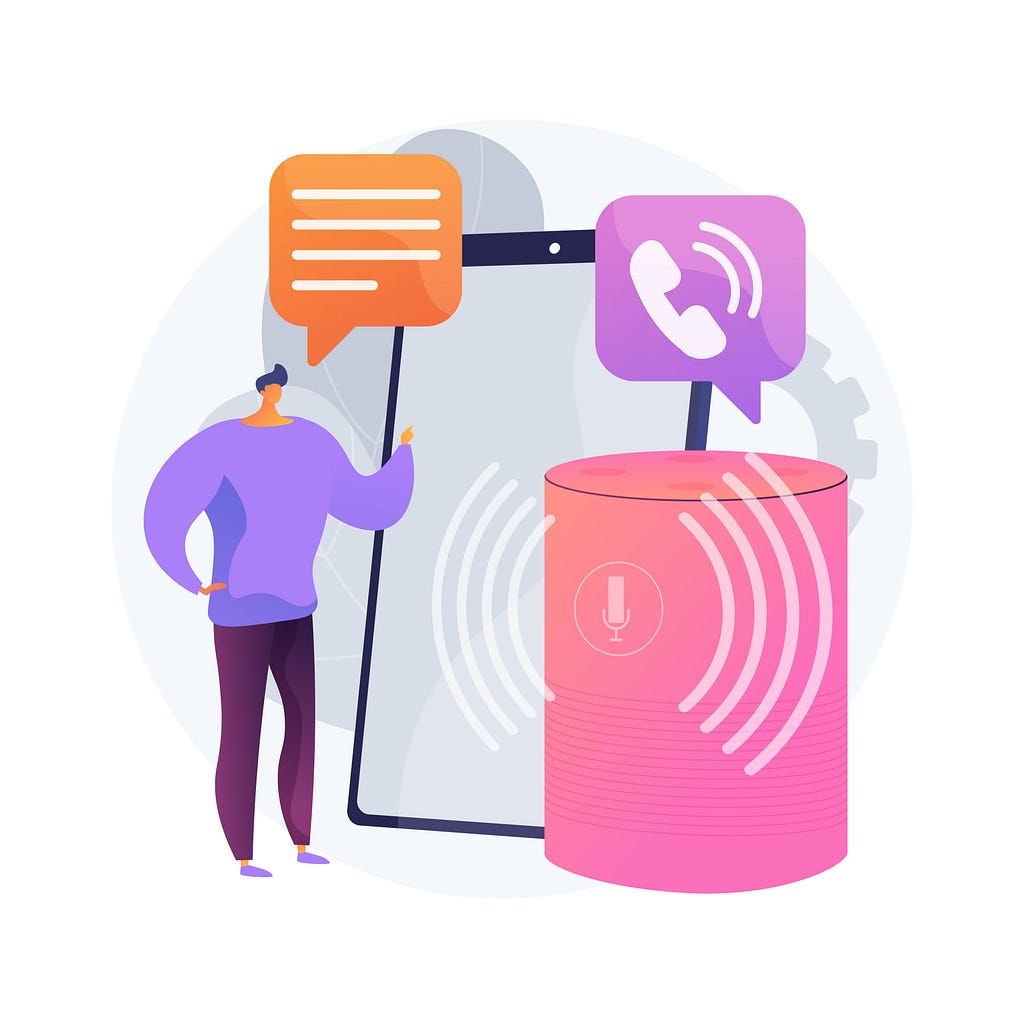
- Smart Devices: Voice data is essential for smart home devices like virtual assistants and home automation systems. It helps these devices comprehend and execute voice commands accurately.
Each of these use cases demonstrates the diverse applications of voice data in enhancing user experience and operational efficiency.
Bridging Gaps and Ensuring Data Quality
We must actively diversify datasets to bridge gaps in voice data collection methodologies. This includes capturing a wider array of languages and accents. Such diversity ensures speech recognition systems perform effectively worldwide.
Ensuring data quality, especially in crowdsourced collections, is another key area. It demands improved verification methods for clarity and consistency. High-quality datasets are vital for different applications. They enable speech systems to understand varied speech patterns and nuances accurately.
Diverse and rich datasets are not just a technical necessity. They represent a commitment to inclusivity and global applicability in the evolving field of AI.

Ethical and Legal Considerations in Voice Data Collection
Ethical and legal considerations hold a lot of importance when collecting voice data, particularly from customers. These include:
- Privacy Concerns: Voice data is sensitive. Thus, you need to respect the user’s privacy.
- Consent: Obtaining explicit consent from individuals before collecting their voice data is a legal requirement in many jurisdictions.
- Transparency: Inform users about how you will use their data.
- Data Security: Implement robust measures to protect voice data from unauthorized access.
- Compliance with Laws: Adhere to relevant data protection laws, like GDPR, which govern the collection and use of personal data.
- Ethical Usage: Make sure you use the collected data ethically and do not harm individuals or groups.
Conclusion
The field of voice data collection for machine learning constantly evolves, facing new advancements and challenges. Key takeaways from this discussion include:
- Diverse Data Collection: Emphasize collecting varied languages and accents for global applicability.
- Cost-Benefit Analysis: Weigh the costs against the potential benefits of comprehensive datasets.
- Time Management: Plan for extended timelines due to the meticulous nature of data collection and validation.
- Legal and Ethical Compliance: Prioritize adherence to privacy laws and ethical standards.
- Quality Over Quantity: Focus on the quality and reliability of data for effective machine learning.
- Technological Adaptation: Stay updated with technological developments to enhance data collection methods.
These points show the dynamic nature of voice data collection. They highlight the need for innovative, ethical, and efficient approaches to machine learning.
How to collect voice data for machine learning was originally published in Becoming Human: Artificial Intelligence Magazine on Medium, where people are continuing the conversation by highlighting and responding to this story.